


Small Hydraulic Conveyor
Hydraulic Conveyor Series

Small Hydraulic Conveyor

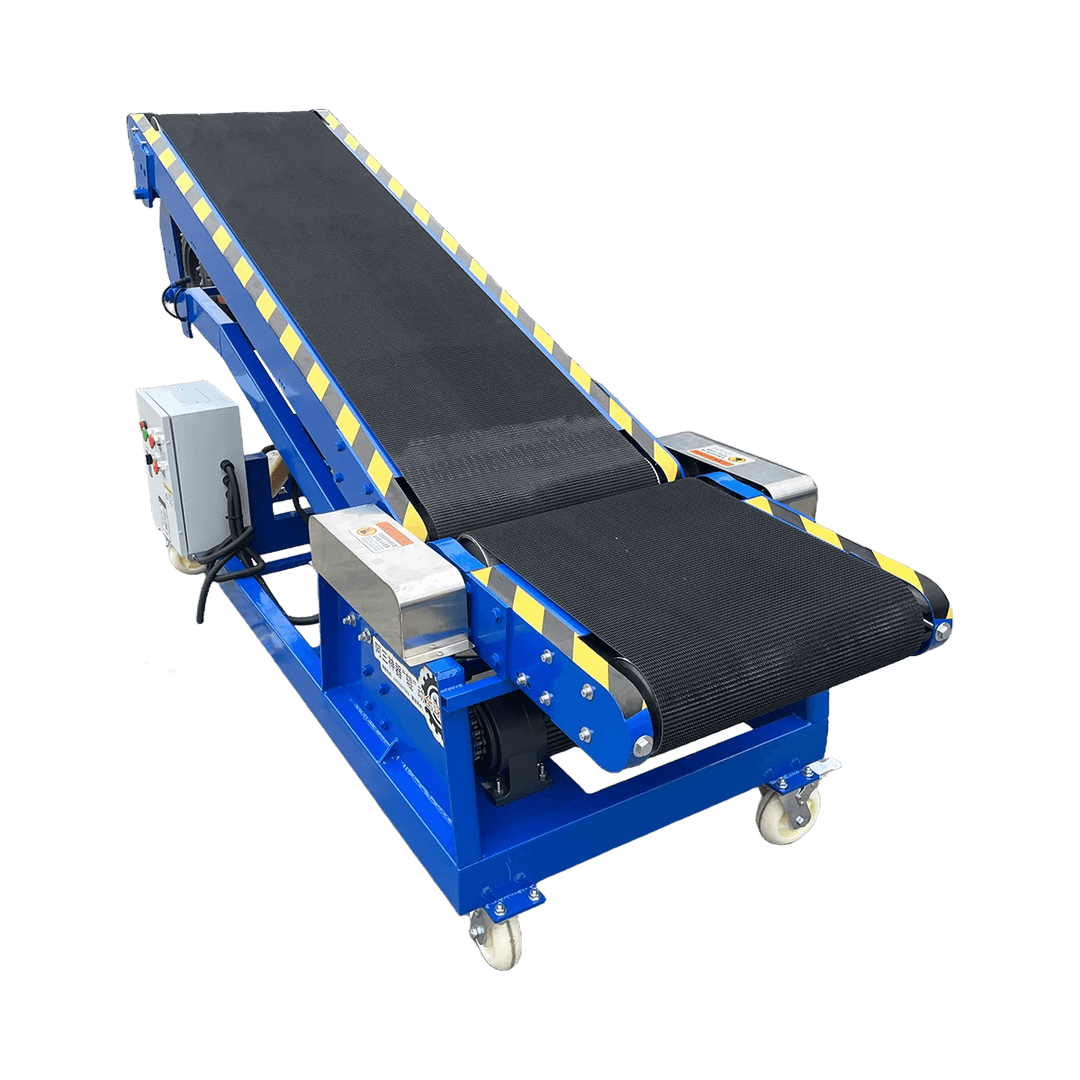
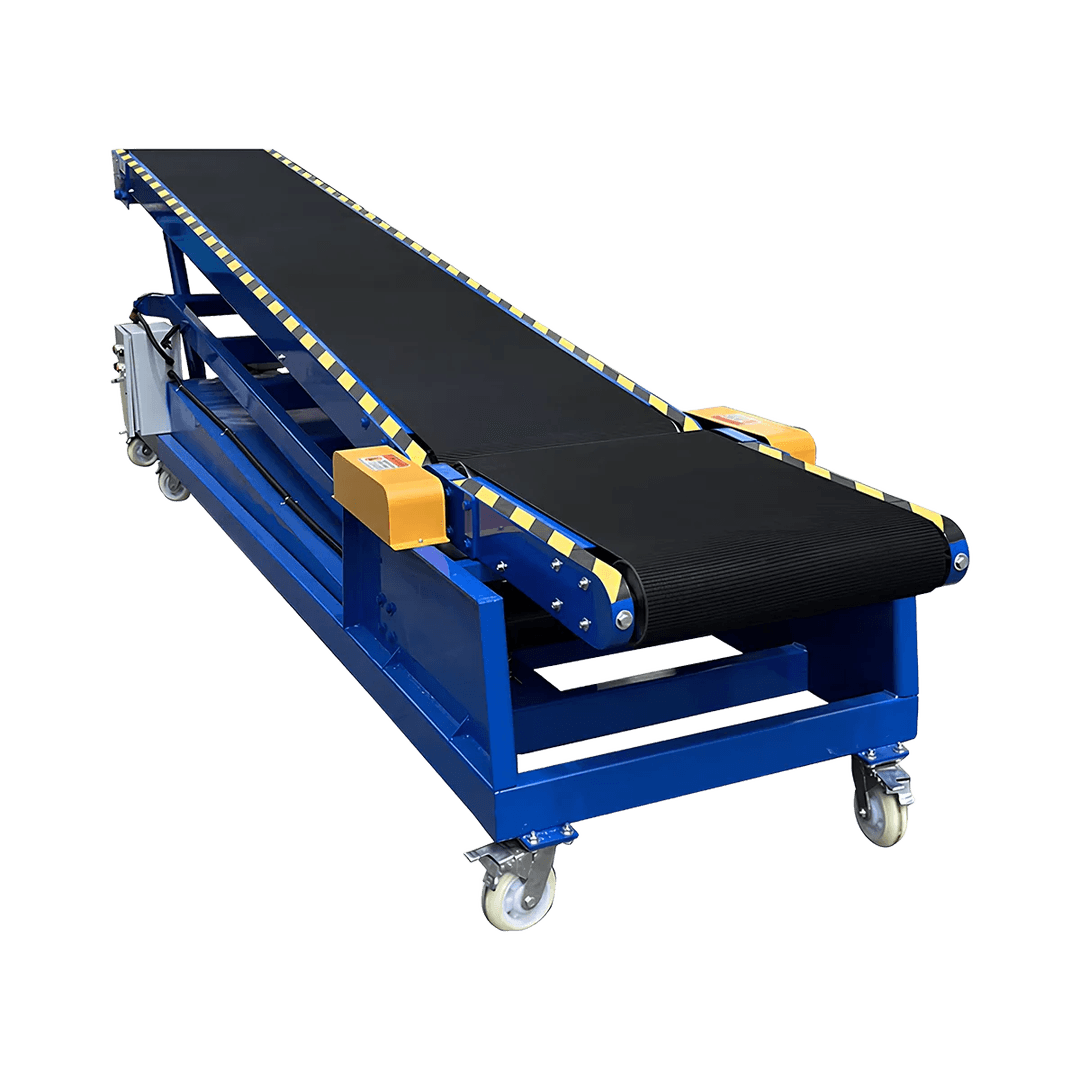
Small Hydraulic Conveyor is designed specifically for sites without a loading dock and is suitable for trucks with cargo beds up to 9.6 meters long. The hydraulic lifting system smoothly adjusts to different cargo-bed heights, enabling safe and efficient loading and unloading. The top bracket can be paired with a roller conveyor up to 9 meters long, allowing goods to be conveyed directly into the truck bed for continuous operation. Compact, reliable, and easy to operate, it is suitable for warehouses, factories, and logistics sites.

Load Capacity
80 kg/m
Effective Width
600/800/1000 mm
Speed
0.3-30 m/min stepless speed regulation
Truck Bed Height
up to 1.4 m truck bed height
Truck Dimensions
up to 9.6 m trucks
Extend into truck interior
extends up to 8 m into the truck
Applicable Goods (Recommended Maximum weight per item)

Small Hydraulic Conveyor Maximum weight per item (reference)

Actual maximum weight depends on specific working conditions and configuration

Metal Drum
Maximum weight (per item)
50 kg/pcs
Plastic Drum
Maximum weight (per item)
50 kg/pcs
Roll
Maximum weight (per item)
50 kg/pcs
Carton
Maximum weight (per item)
50 kg/pcs
Bagged
Maximum weight (per item)
50 kg/pcs
Product Options

Small Hydraulic Conveyor Product Options

Select appropriate optional parts, structural components, and auxiliary configurations based on site conditions.

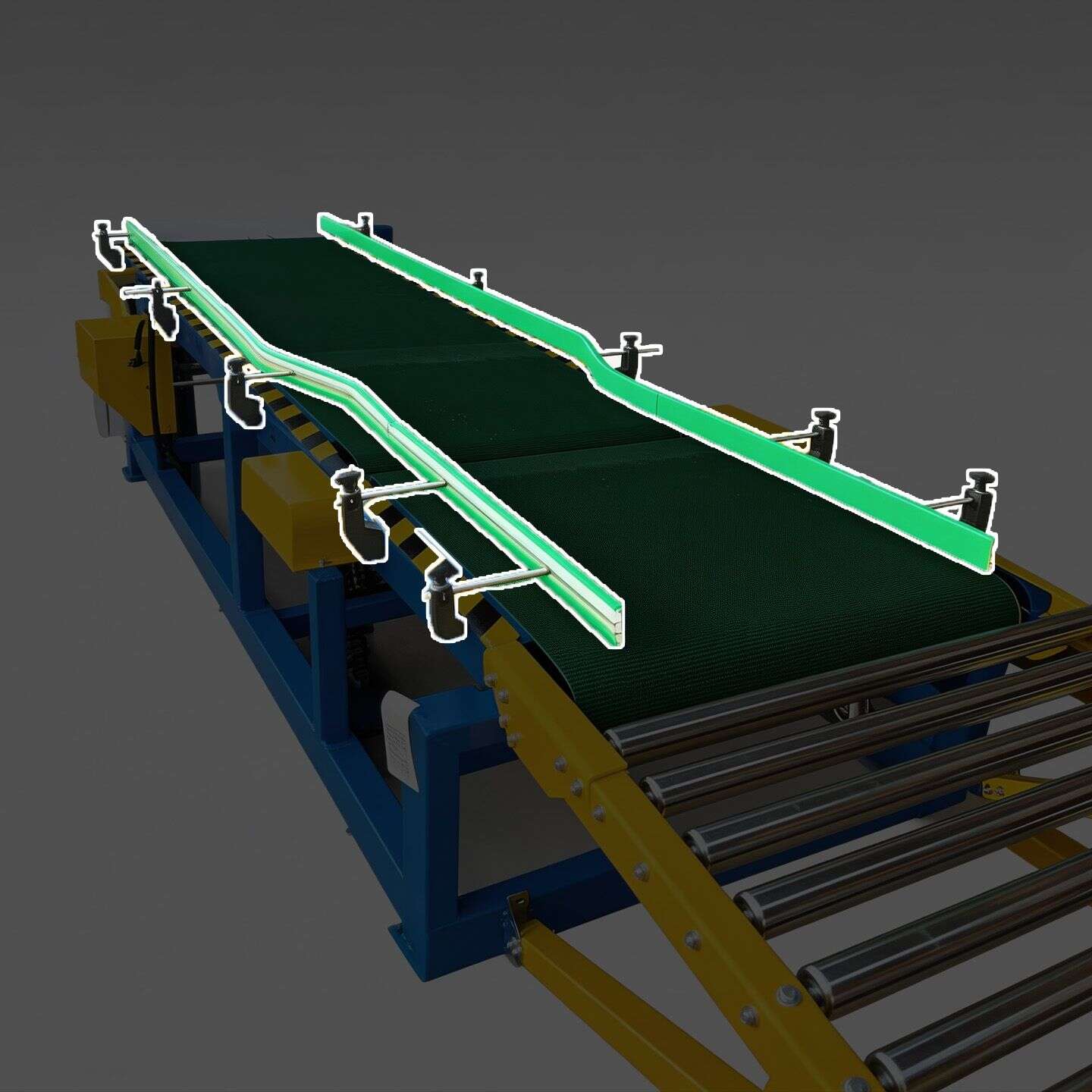
#1 Incline Conveyor Guardrail
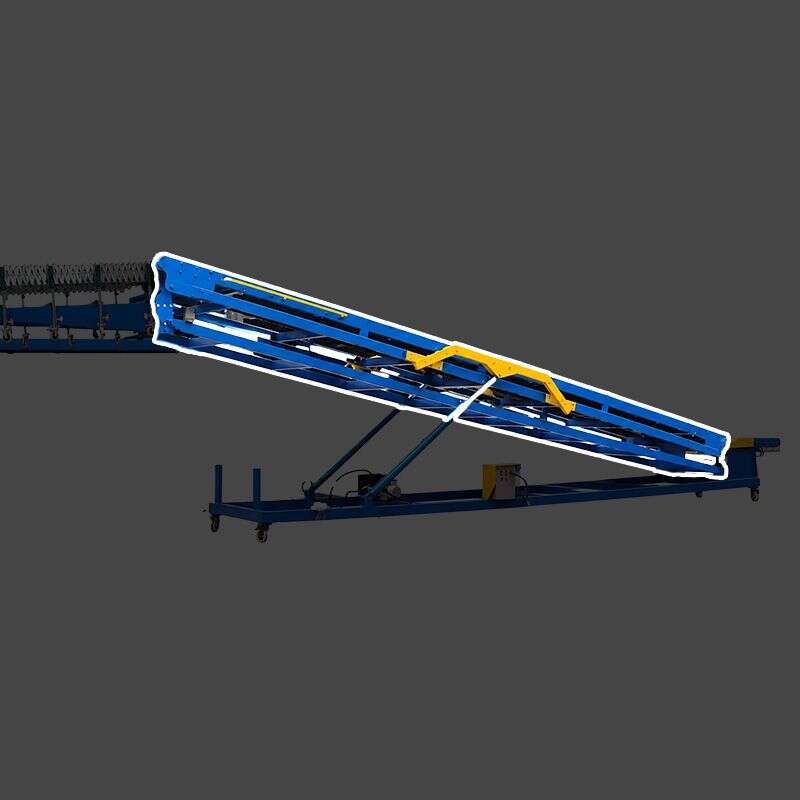
#2 Incline Conveyor Extension
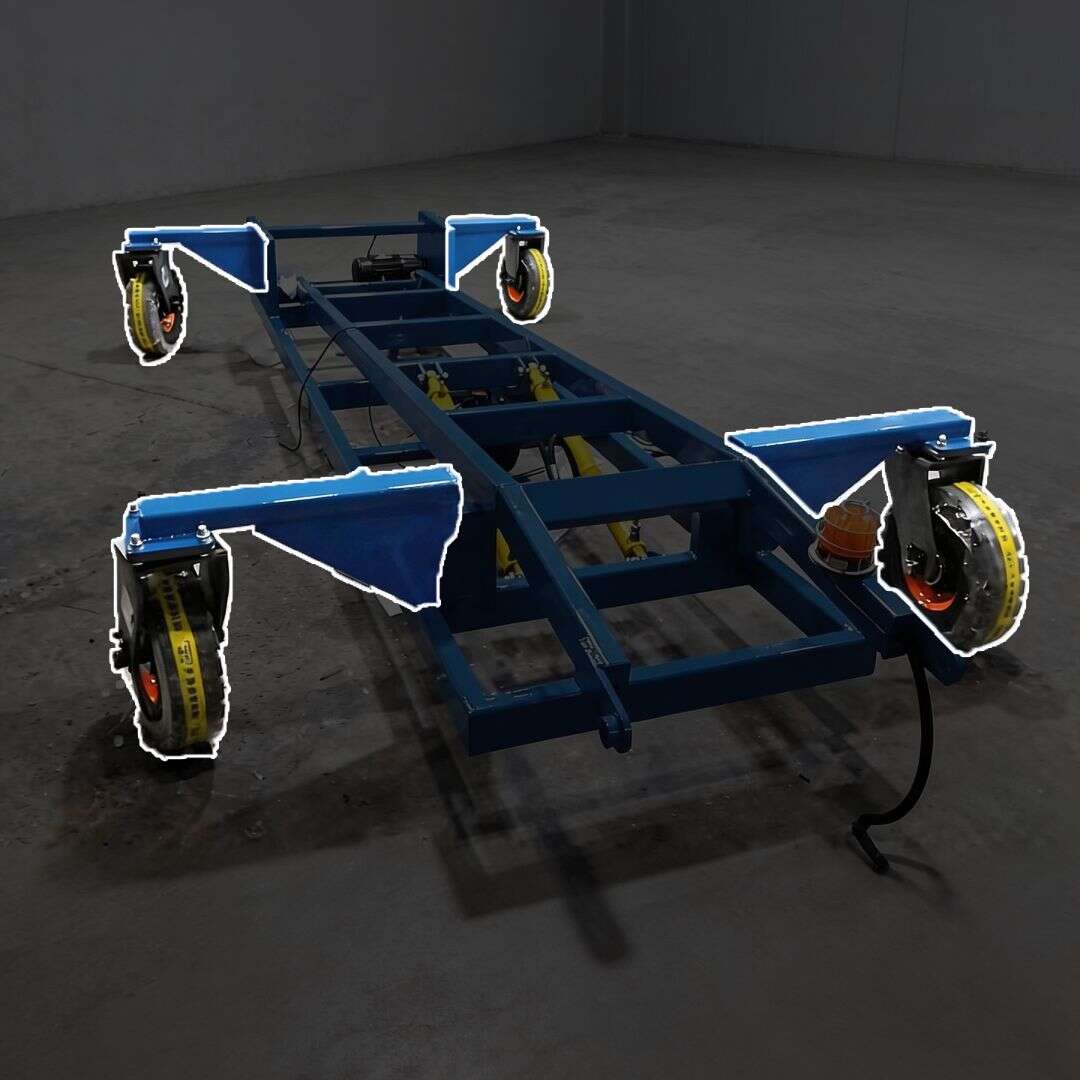
#3 Casters upgraded to 450mm diameter rubber casters
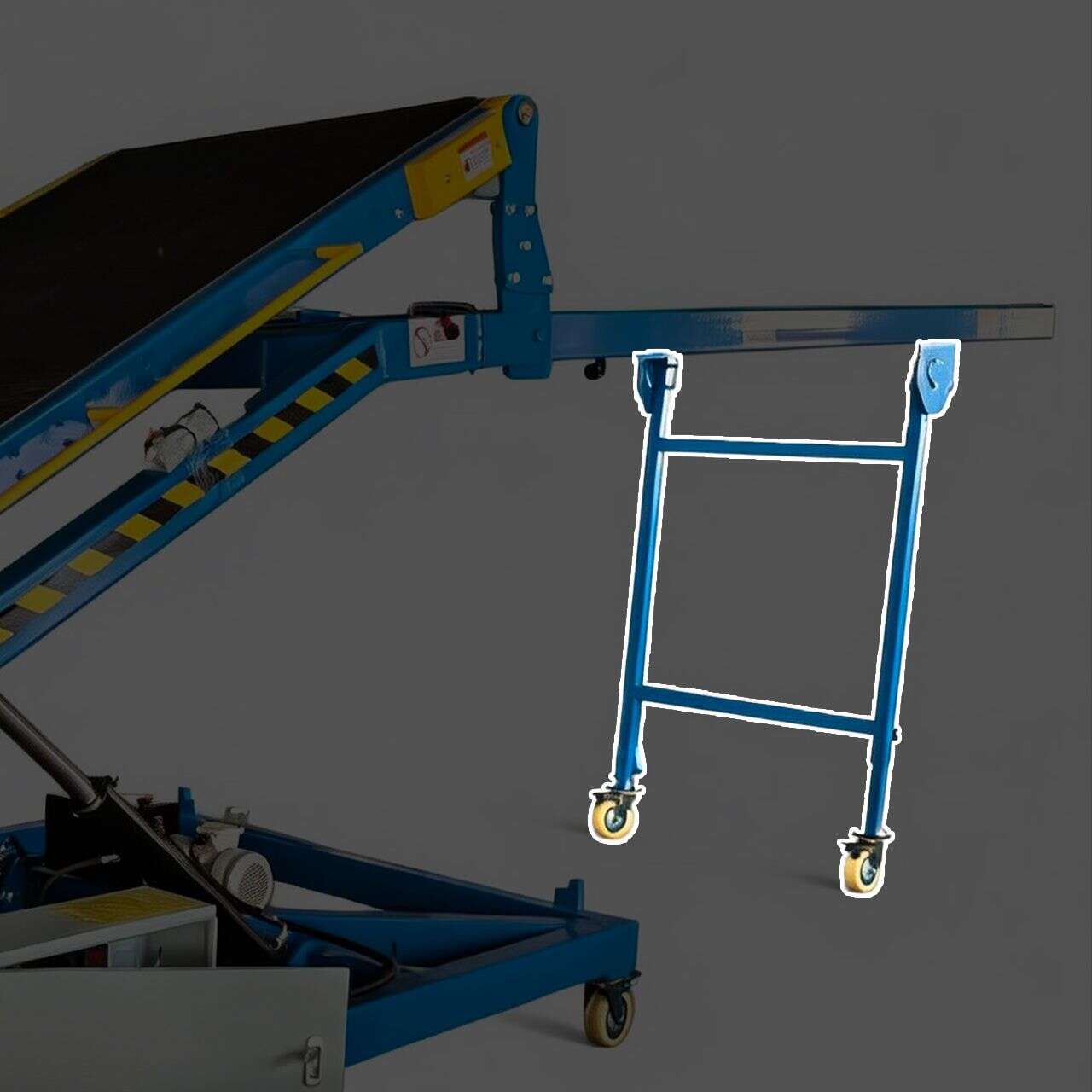
#4 Support Legs for the Top Bracket
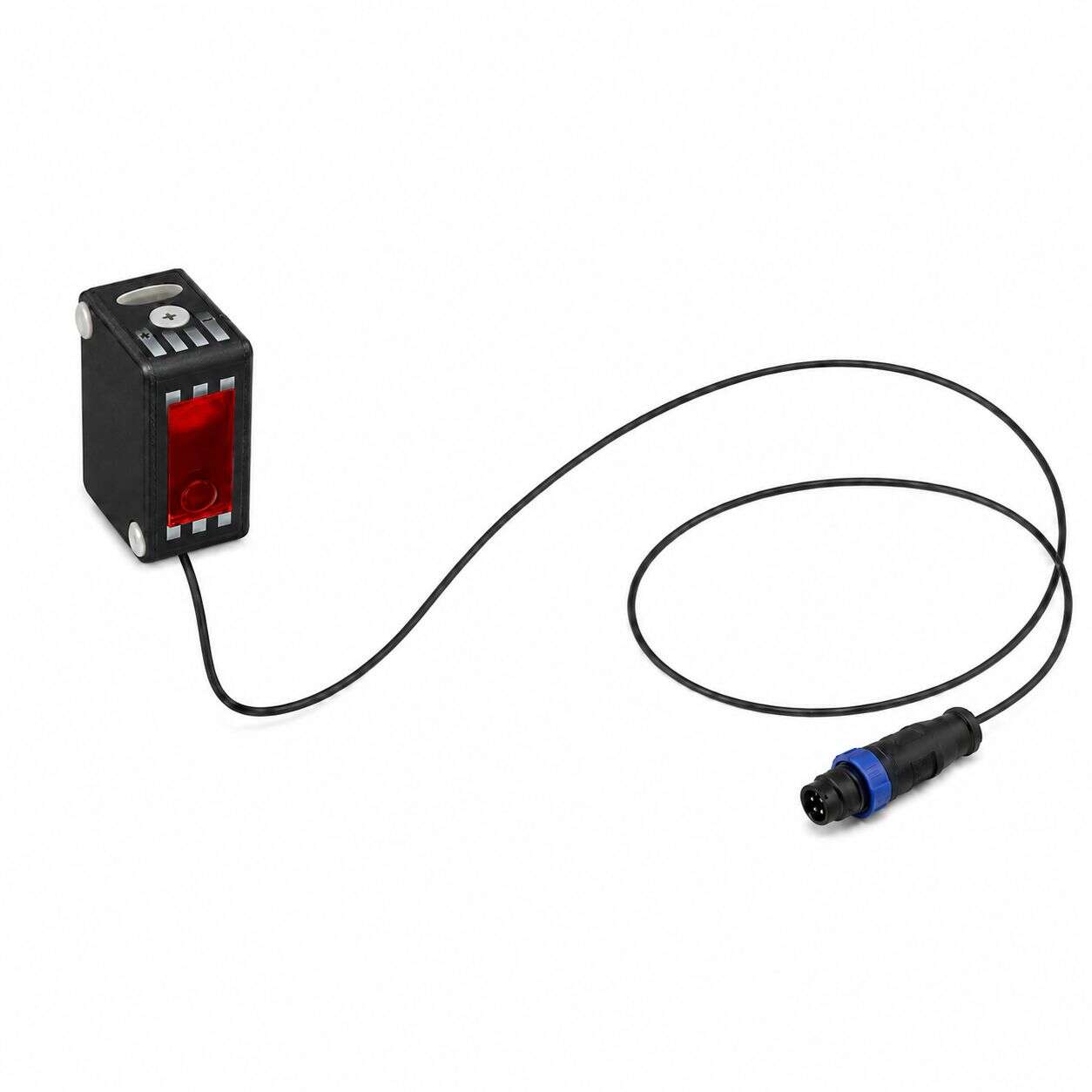
#5 Optical sensor
#5 Optical sensor
Qualifications and Reports

Small Hydraulic Conveyor Qualifications and Reports

View the certificates, test reports, and patent certificates related to this product for easier verification of qualifications and technical basis.

Certificates

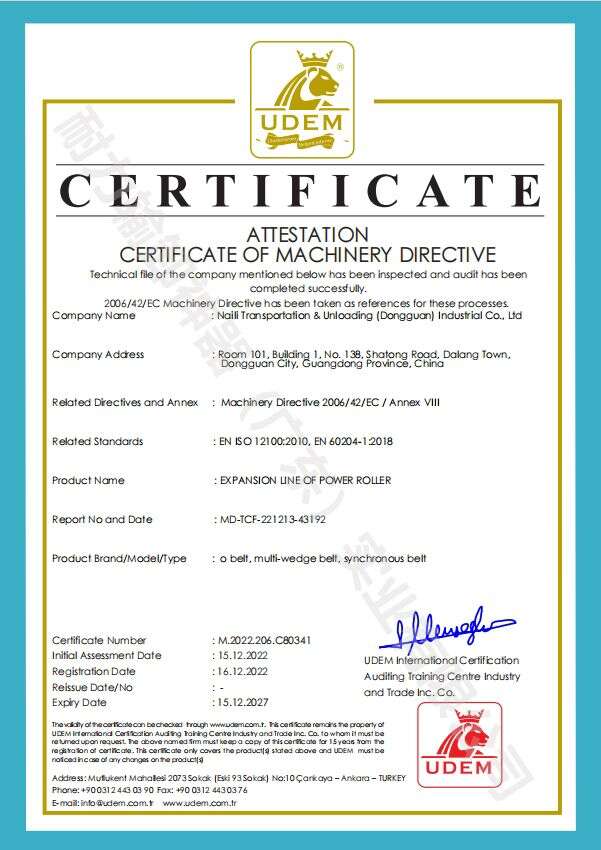
CE Certificate

CE Certificate

PDF
National Conveyor Industry Brand Promotion Selection - Top 10 Conveyor Brands

National Conveyor Industry Brand Promotion Selection - Top 10 Conveyor Brands

PDF
High-Tech Enterprise Certificate

High-Tech Enterprise Certificate

PDF
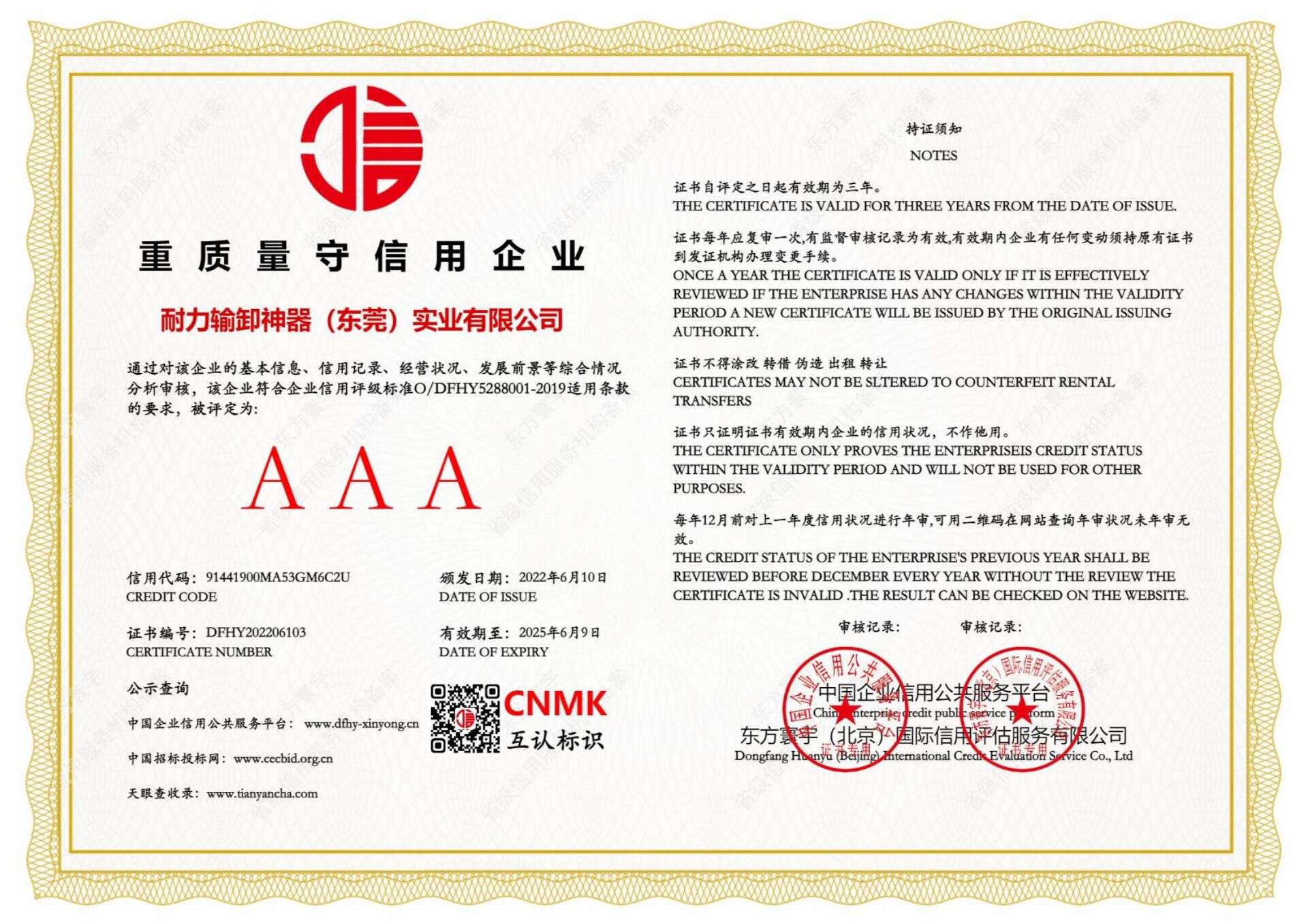
3A Heavy Quality and Credit-Keeping Enterprise

3A Heavy Quality and Credit-Keeping Enterprise

PDF
3A Contract-Honoring and Credit-Keeping Enterprise

3A Contract-Honoring and Credit-Keeping Enterprise

PDF
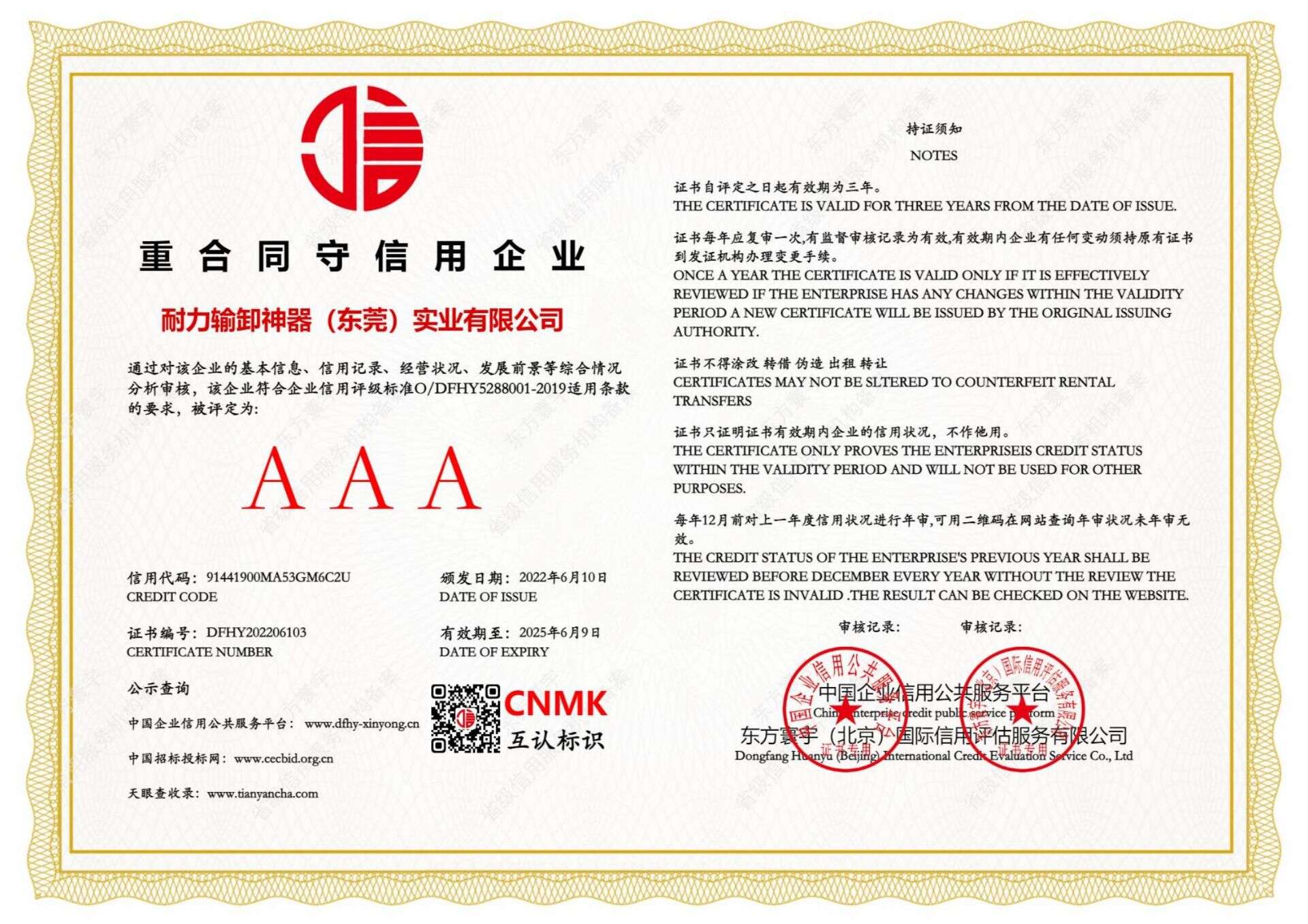
3A Heavy Contract-Honoring and Credit-Keeping Enterprise

3A Heavy Contract-Honoring and Credit-Keeping Enterprise

PDF
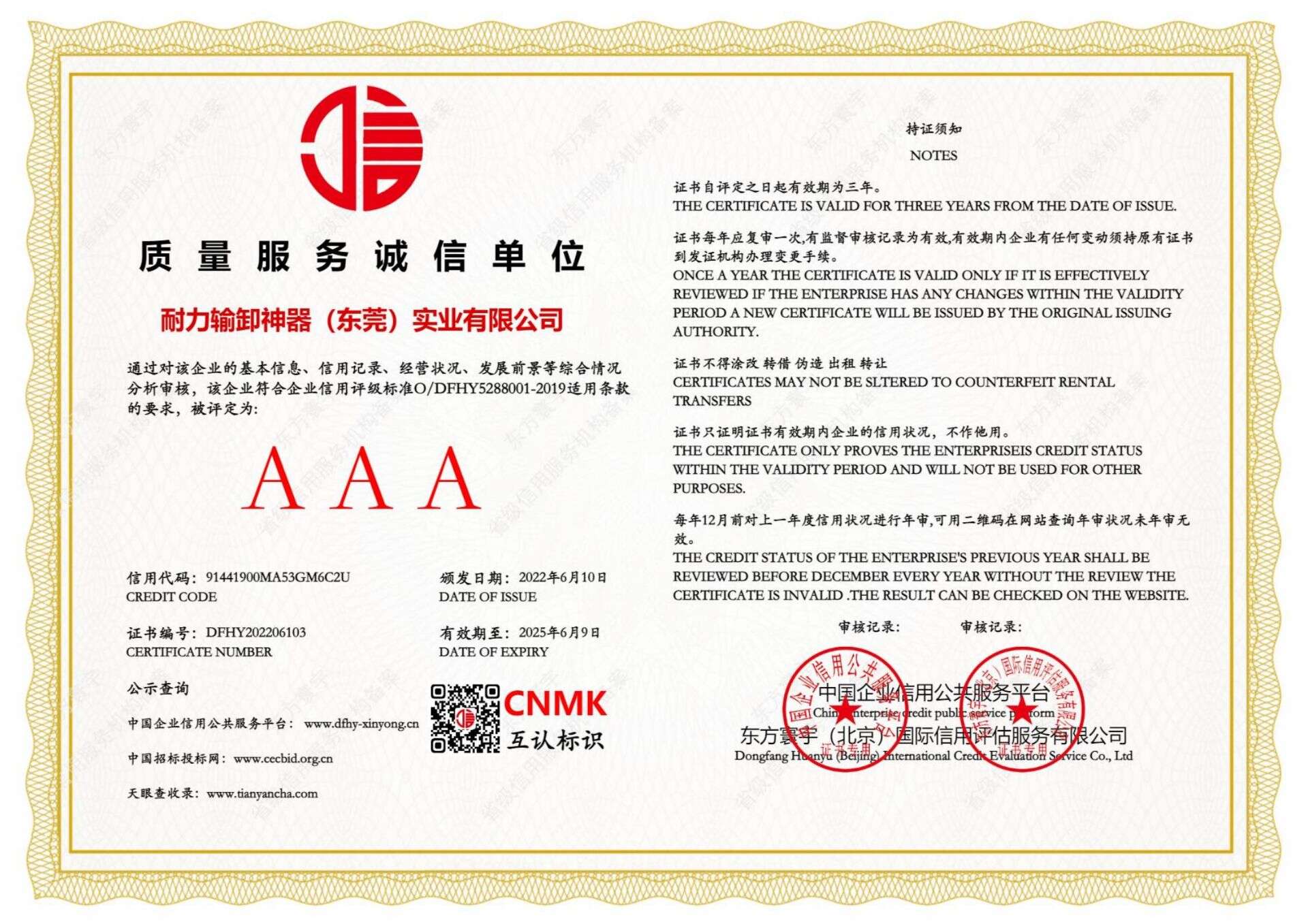
3A Quality Service Integrity Unit

3A Quality Service Integrity Unit

PDF
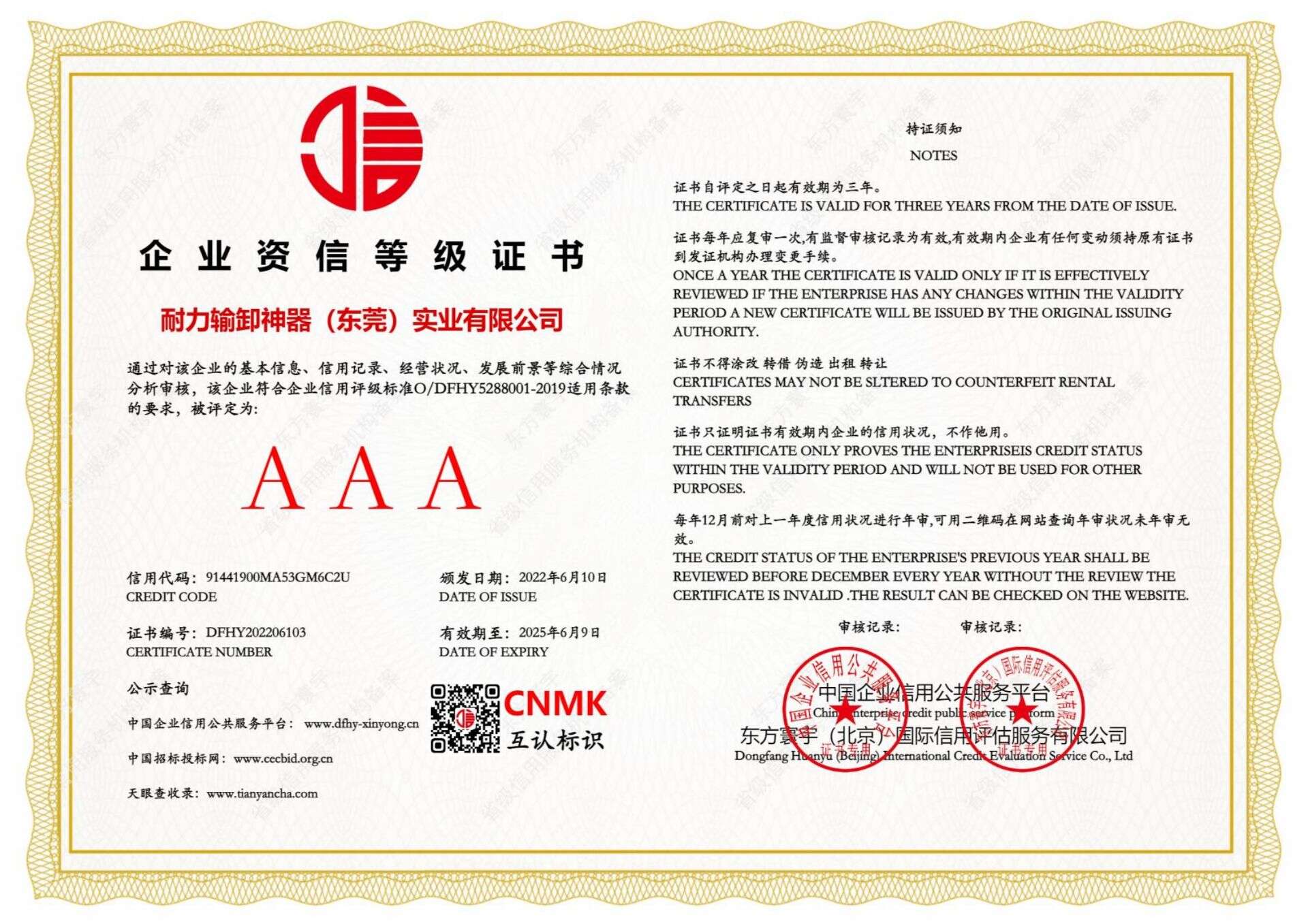
3A Enterprise Credit Rating Certificate

3A Enterprise Credit Rating Certificate

PDF
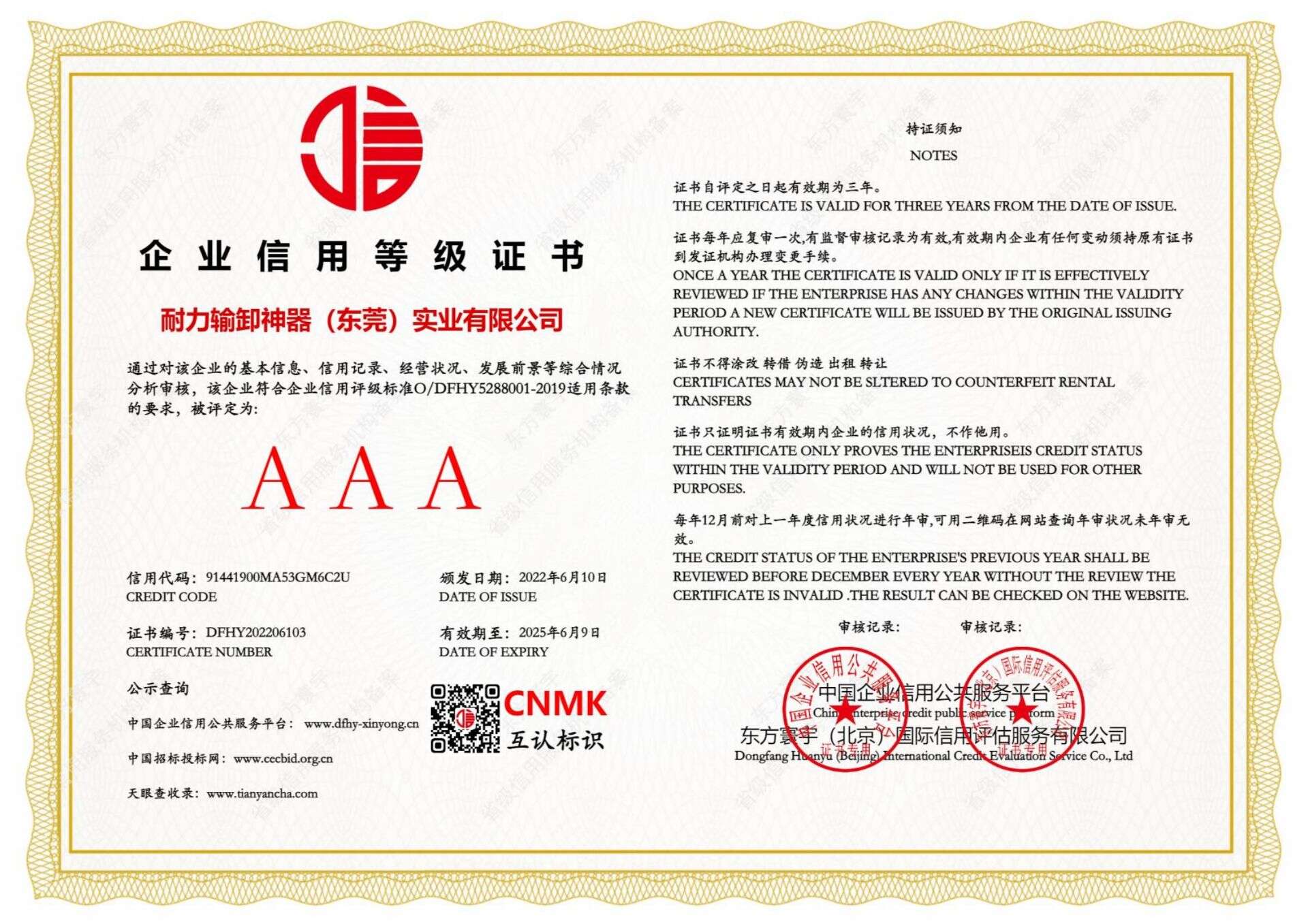
3A Enterprise Credit Rating Certificate

3A Enterprise Credit Rating Certificate

PDF
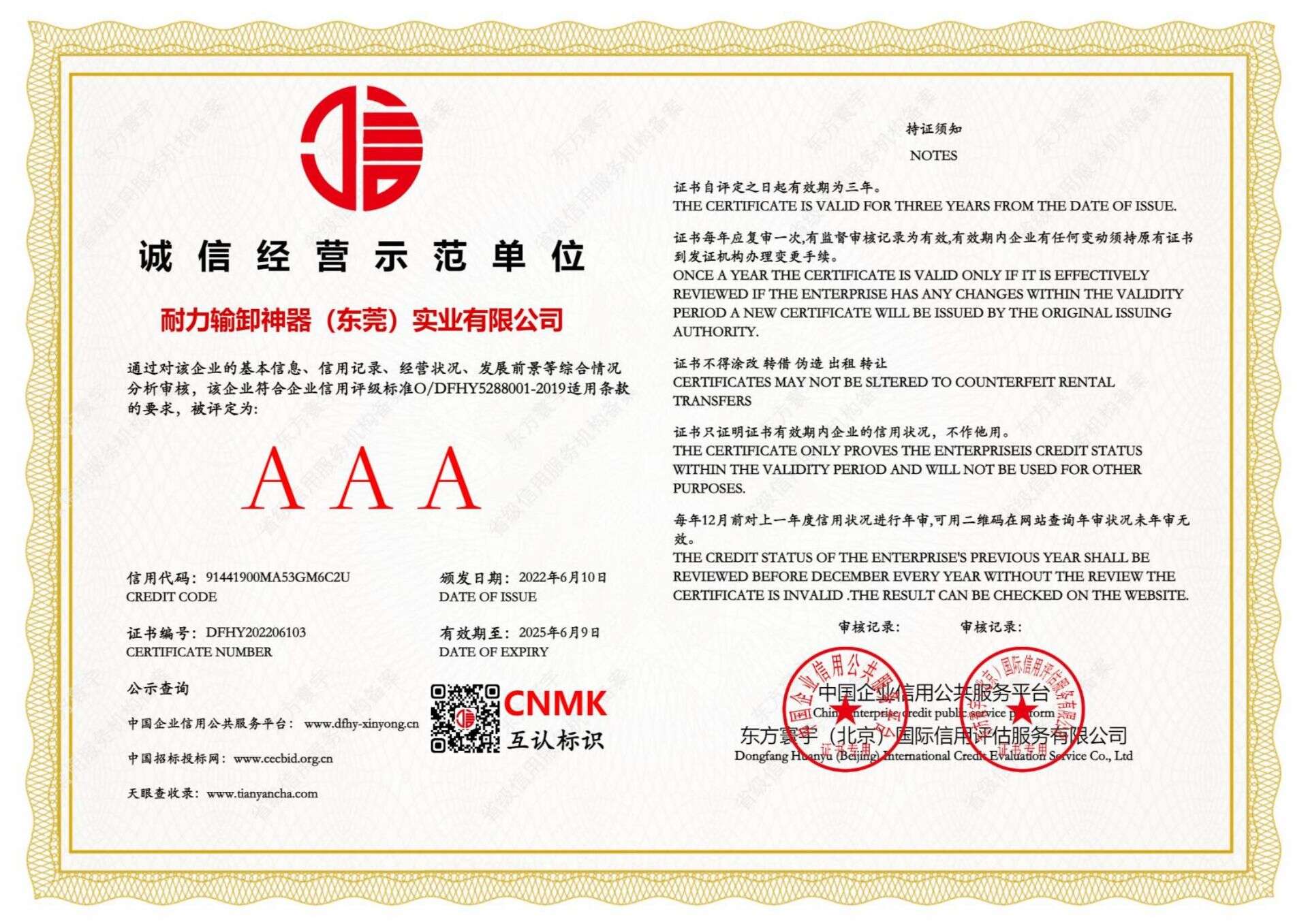
3A Honest Operation Demonstration Unit

3A Honest Operation Demonstration Unit

PDF
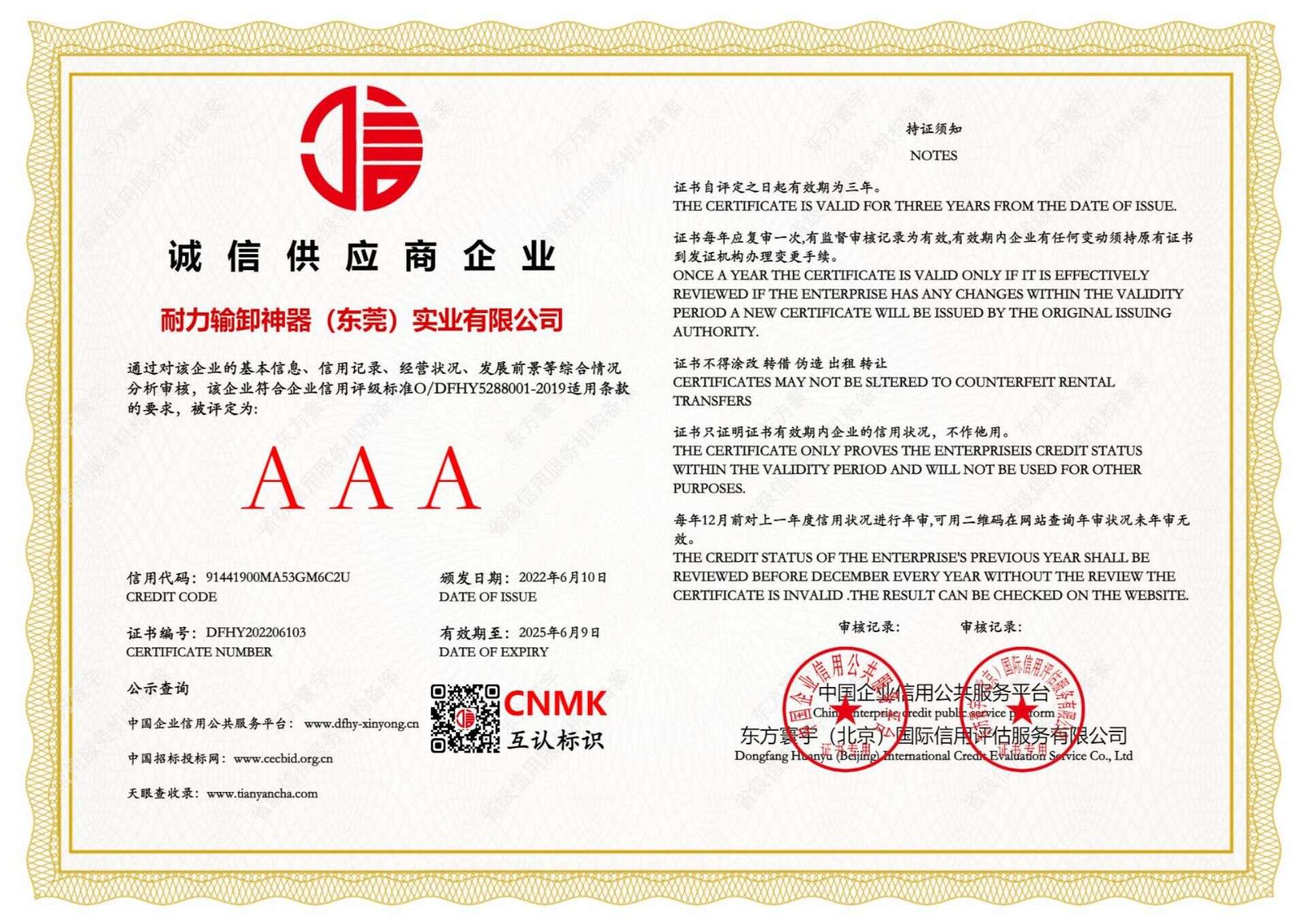
3A Honest Supplier Enterprise

3A Honest Supplier Enterprise

PDF
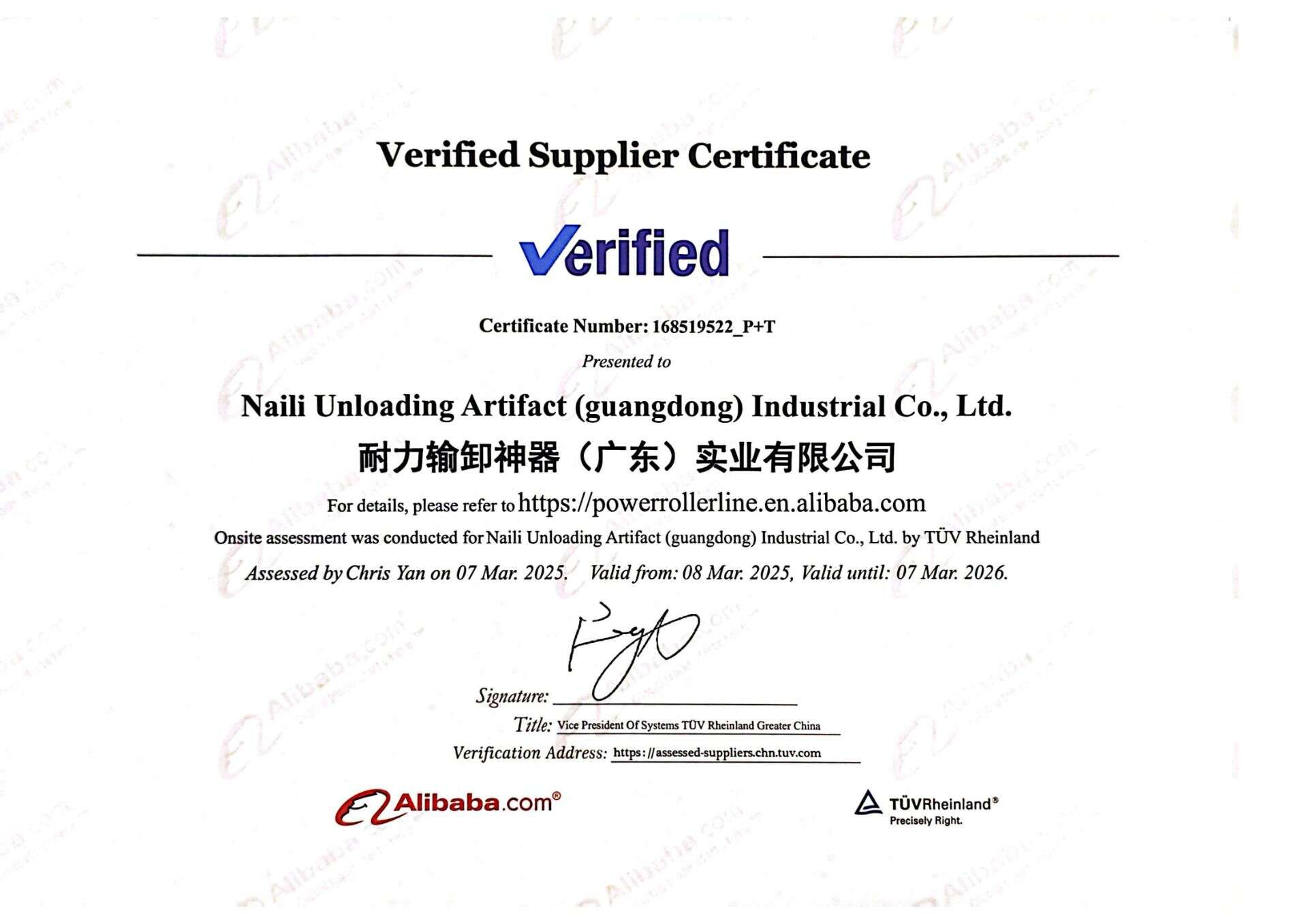
Alibaba Enterprise Certification Certificate

Alibaba Enterprise Certification Certificate

PDF
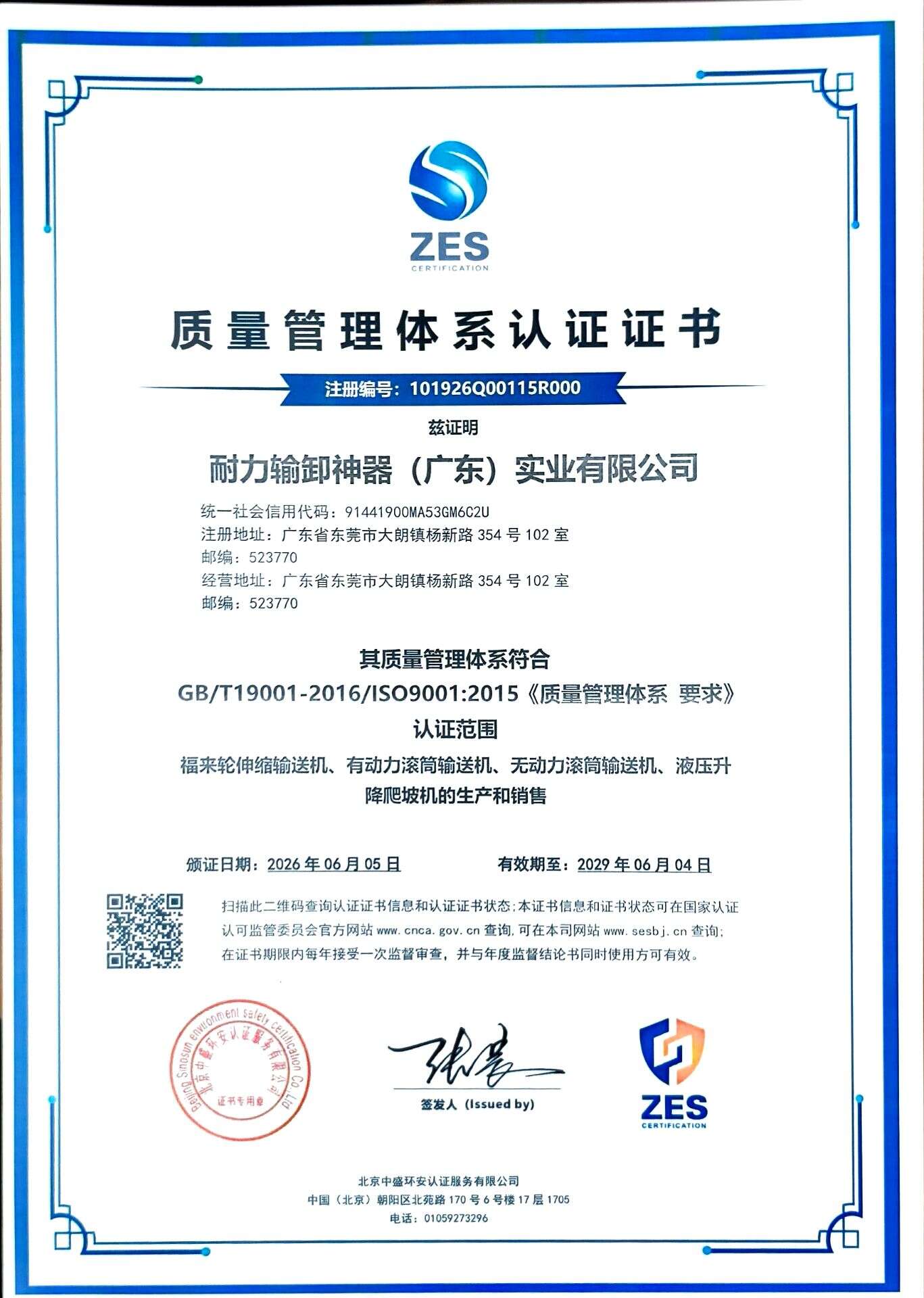
ISO Certificate - Chinese

ISO Certificate - Chinese

PDF
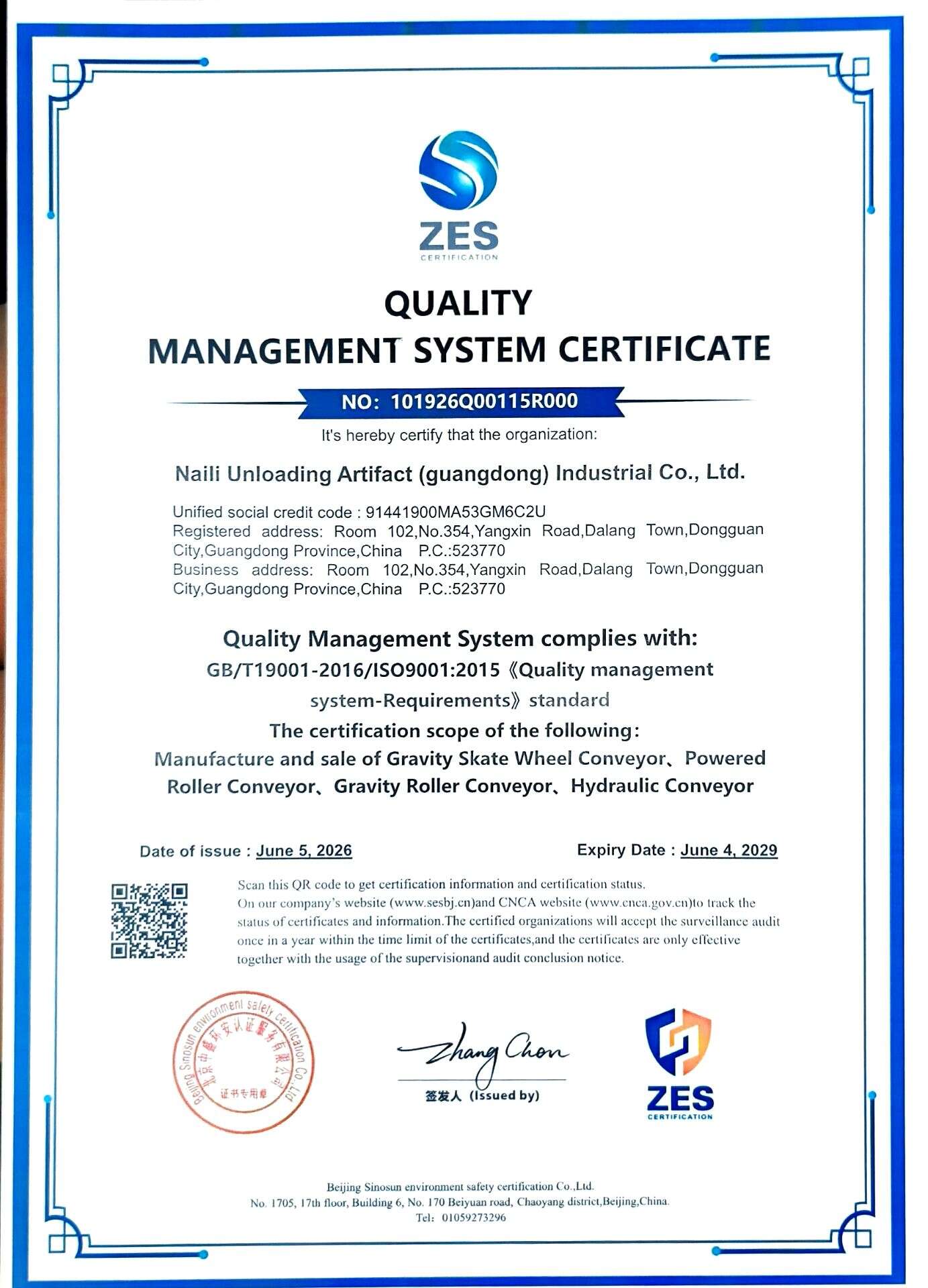
ISO Certificate - English

ISO Certificate - English

PDF
TUV Certificate

TUV Certificate

PDF
CCTV-2 Finance Channel Broadcast Honor Certificate

CCTV-2 Finance Channel Broadcast Honor Certificate

PDF
Actual Photos & Videos

Small Hydraulic Conveyor Case Videos

View equipment structure, on-site status, and operational details through galleries and videos.

Actual Photos & Videos

Product Guide Videos

Get a quick overview of this product’s configuration and operating essentials through selection, installation, and usage videos.

Factory Strength

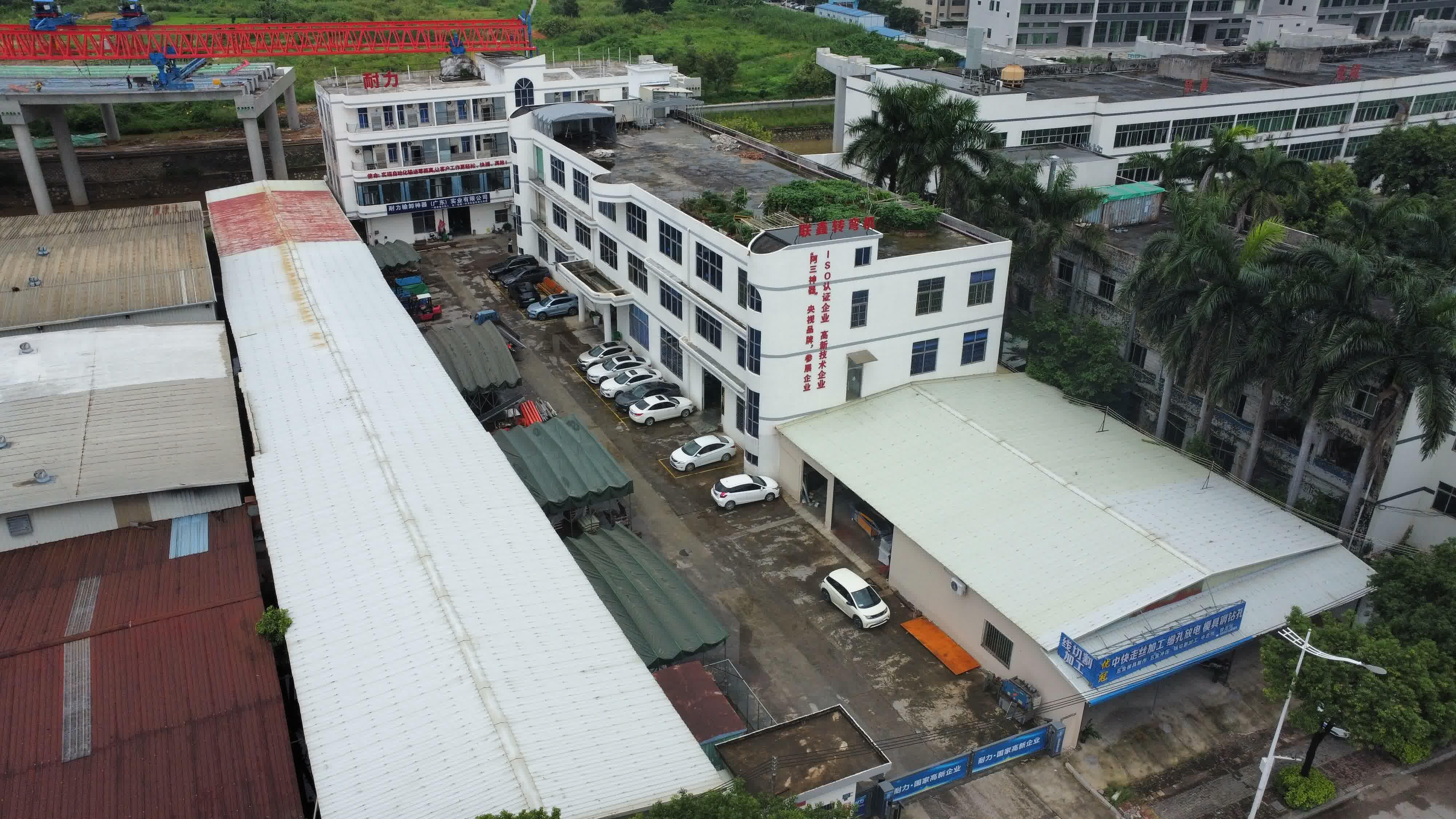
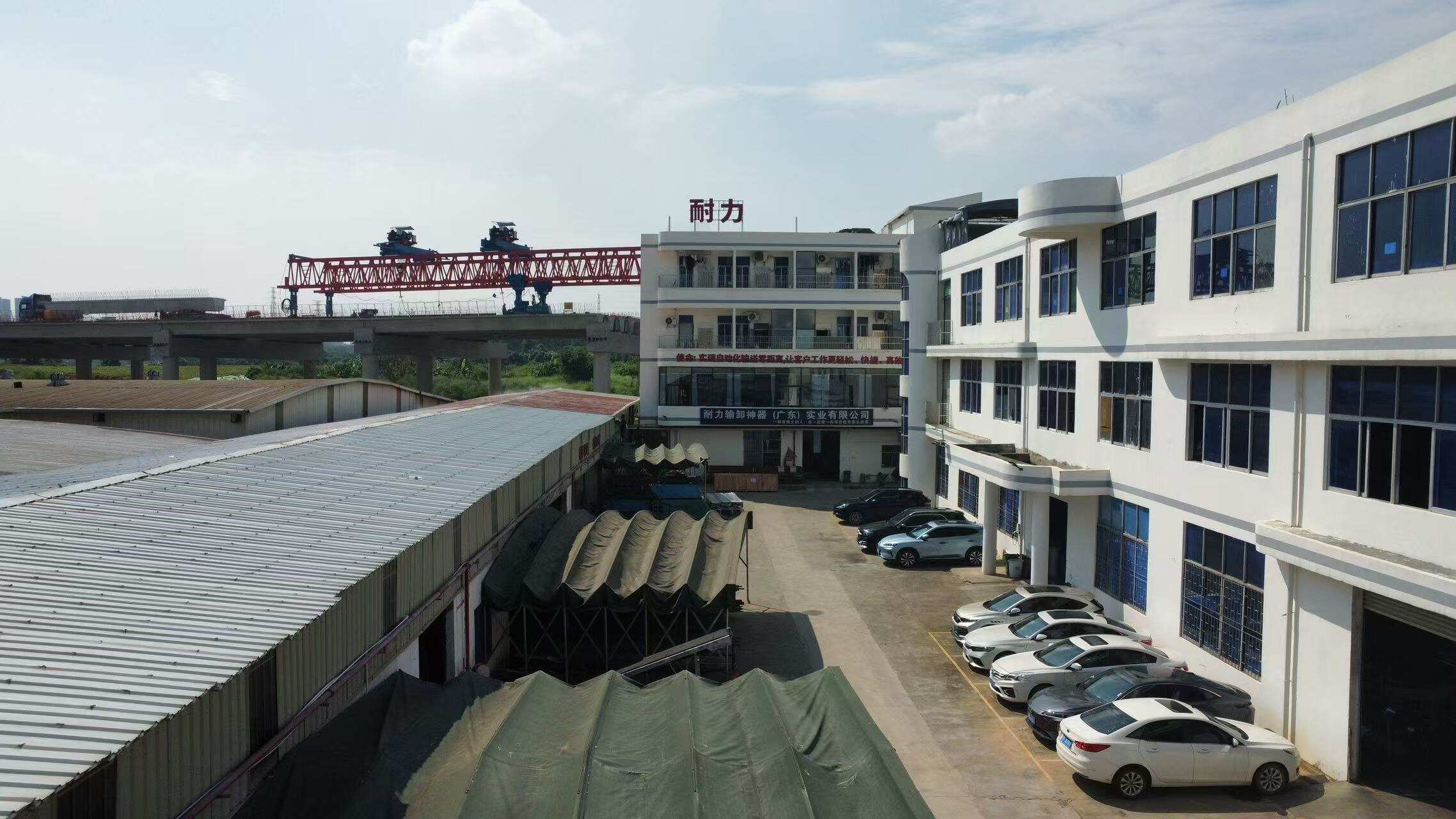
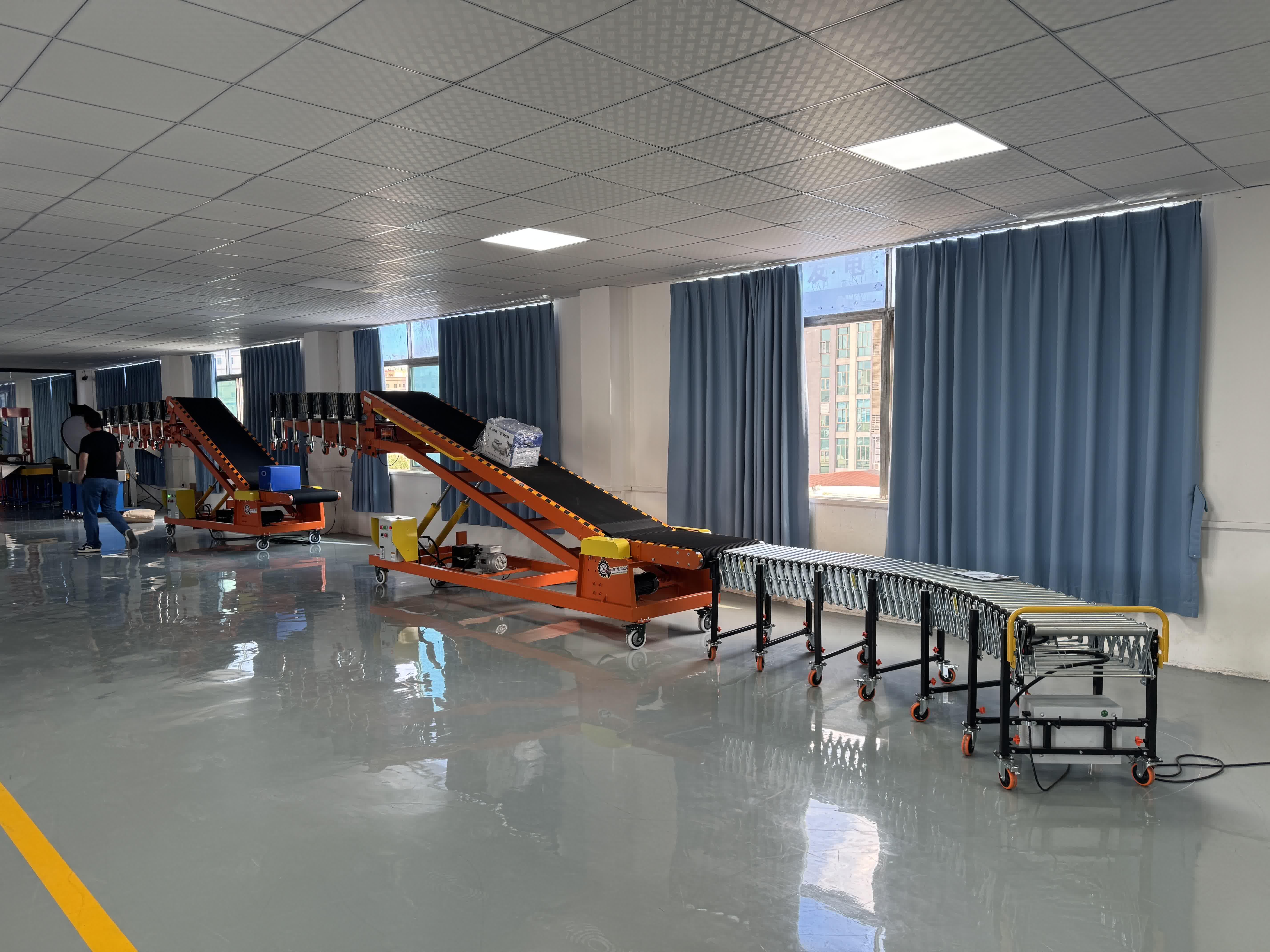
Learn about production equipment, workshop environment, processing capacity, and quality control through real photos and videos.

工厂图片 3
Image

工厂图片 3

工厂主图
Image

工厂主图

工厂图片 1
Image

工厂图片 1

工厂图片 2
Image

工厂图片 2

工厂图片 4
Image

工厂图片 4

Solutions

Small Hydraulic Conveyor Recommended Matching Solutions

View published conveyor solutions to learn how this product is configured and combined in loading and unloading scenarios.

Small Hydraulic Conveyor loading and unloading solution

9 solutions
Specifications

Specifications & Technical Data

View core parameters, structured specifications, and downloadable materials by model.

Small Hydraulic Conveyor Technical Specifications

Conveyor Knowledge

Large Truck Loading and Unloading Large Hydraulic Conveyor + Roller Line

The Large Hydraulic Conveyor is configured with 9 sections of rubber-covered Multi-Wedge Belt Powered Roller Conveyor to achieve a total coverage length of 10 meters, suitable for loading and unloading operations with 9.6m and 13m truck beds. The rubber-covered design provides anti-slip performance, the lower platform height is adjustable, and compared with medium-sized equipment, the load capacity is significantly improved, effectively increasing the loading and unloading efficiency of 50kg bagged goods.
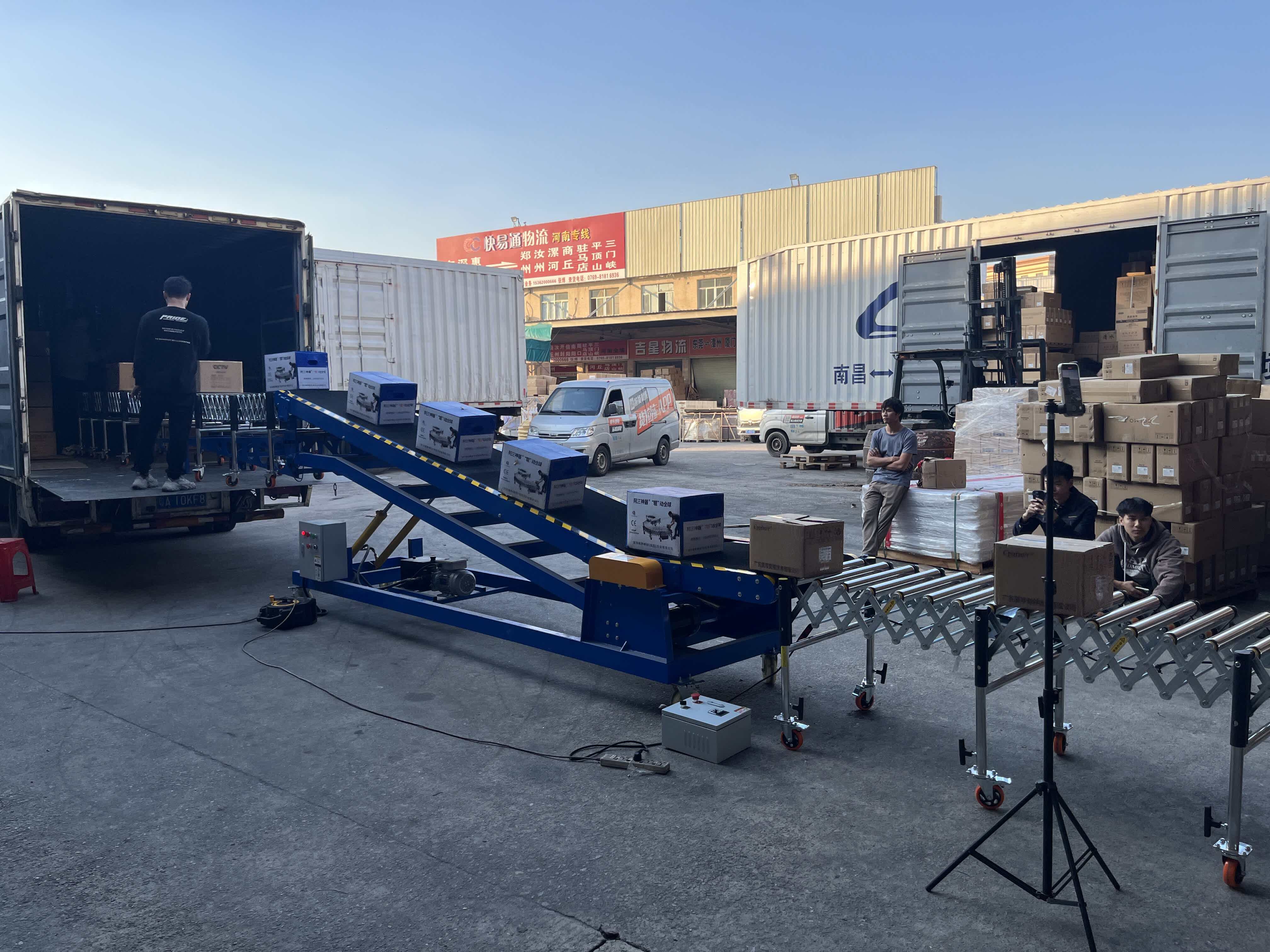
Large Truck Loading and Unloading Large Hydraulic Conveyor + Roller Line
Publish Date: 2026-03-23

In large cargo compartment loading and unloading, traditional manual handling faces low efficiency and high labor intensity. The combination of a heavy-duty incline conveyor with a 9-section rubber-coated multi-wedge belt driven roller conveyor provides a mechanized solution for 9.6-meter and 13-meter compartments. By extending the conveying distance and improving load capacity, this configuration greatly enhances the handling efficiency of heavy items such as 50kg bagged goods.

Configuration features of the heavy-duty incline conveyor paired with a 9-section rubber-coated multi-wedge belt driven roller conveyor

Analysis of the equipment combination structure

The combination of the heavy-duty incline conveyor and the 9-section rubber-coated multi-wedge belt driven roller conveyor adopts a modular design. With each section measuring 1.1 meters, the fully extended roller conveyor reaches a total coverage length of 10 meters. This setup can extend directly to the front of a 9.6-meter compartment, providing sufficient operational space for loading and unloading.
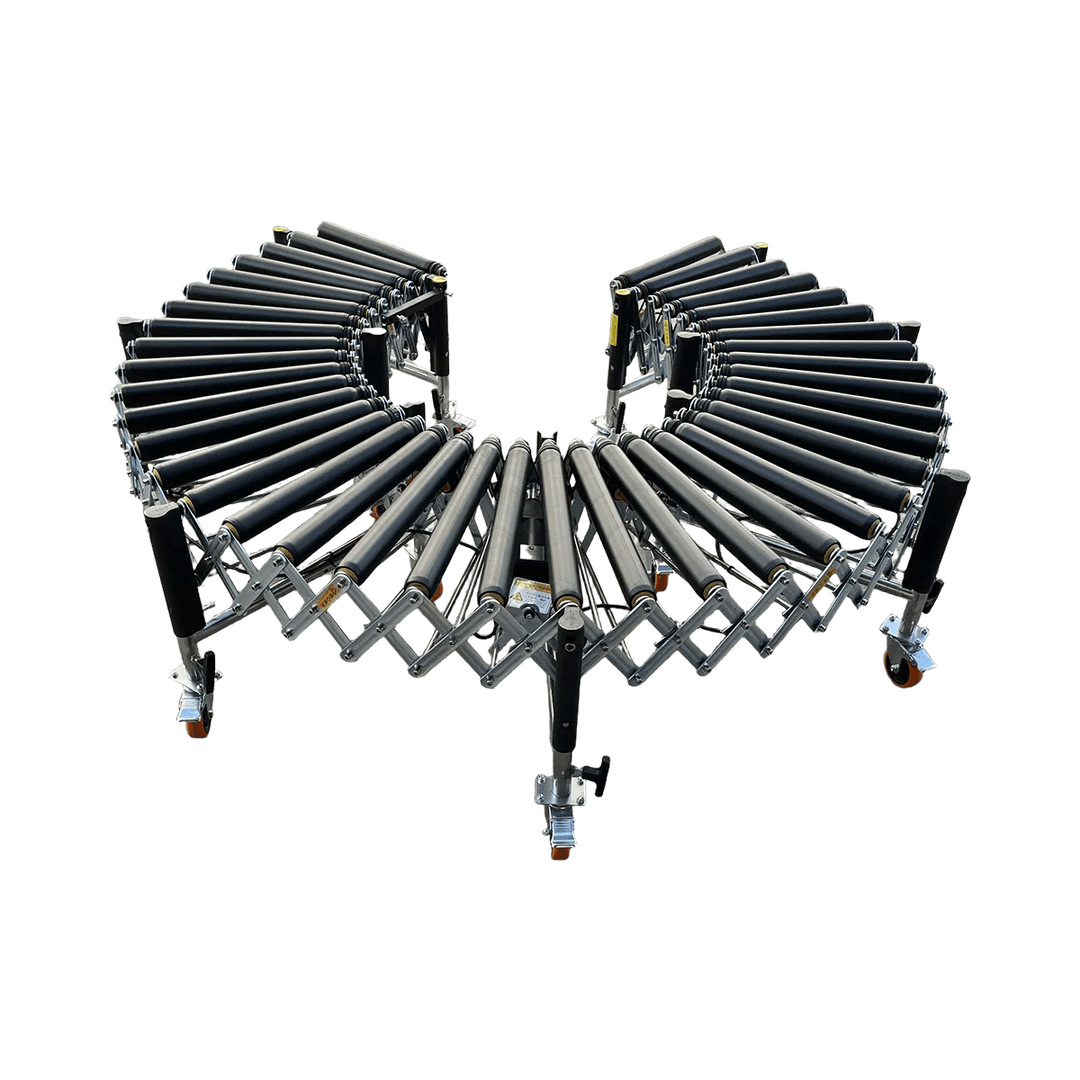
Multi-Wedge Belt Powered Rubber-Covered Roller Conveyor

Multi-Wedge Belt Powered Rubber-Covered Roller Conveyor

The multi-wedge-belt Powered Rubber-Covered Roller Conveyor is specifically designed for the smooth conveying of bagged goods. It uses multi-wedge-bel…

The rubber-coated multi-wedge belt driven roller conveyor uses a multi-wedge belt drive system, offering smoother operation compared to chain drives. The rubber coating on the roller surface not only provides good friction but also protects the cargo surface from scratches. The support structure of the heavy-duty incline conveyor is reinforced to withstand higher loads and continuous operation.

Load capacity and conveying distance advantages

The heavy-duty incline conveyor significantly improves load capacity over medium-duty models. The lower platform uses a manual adjustment mechanism that can be precisely set to match the height of different compartments, ensuring the conveyor meets the compartment floor at an appropriate angle. This design allows the equipment to adapt to trucks of various specifications, enhancing versatility.
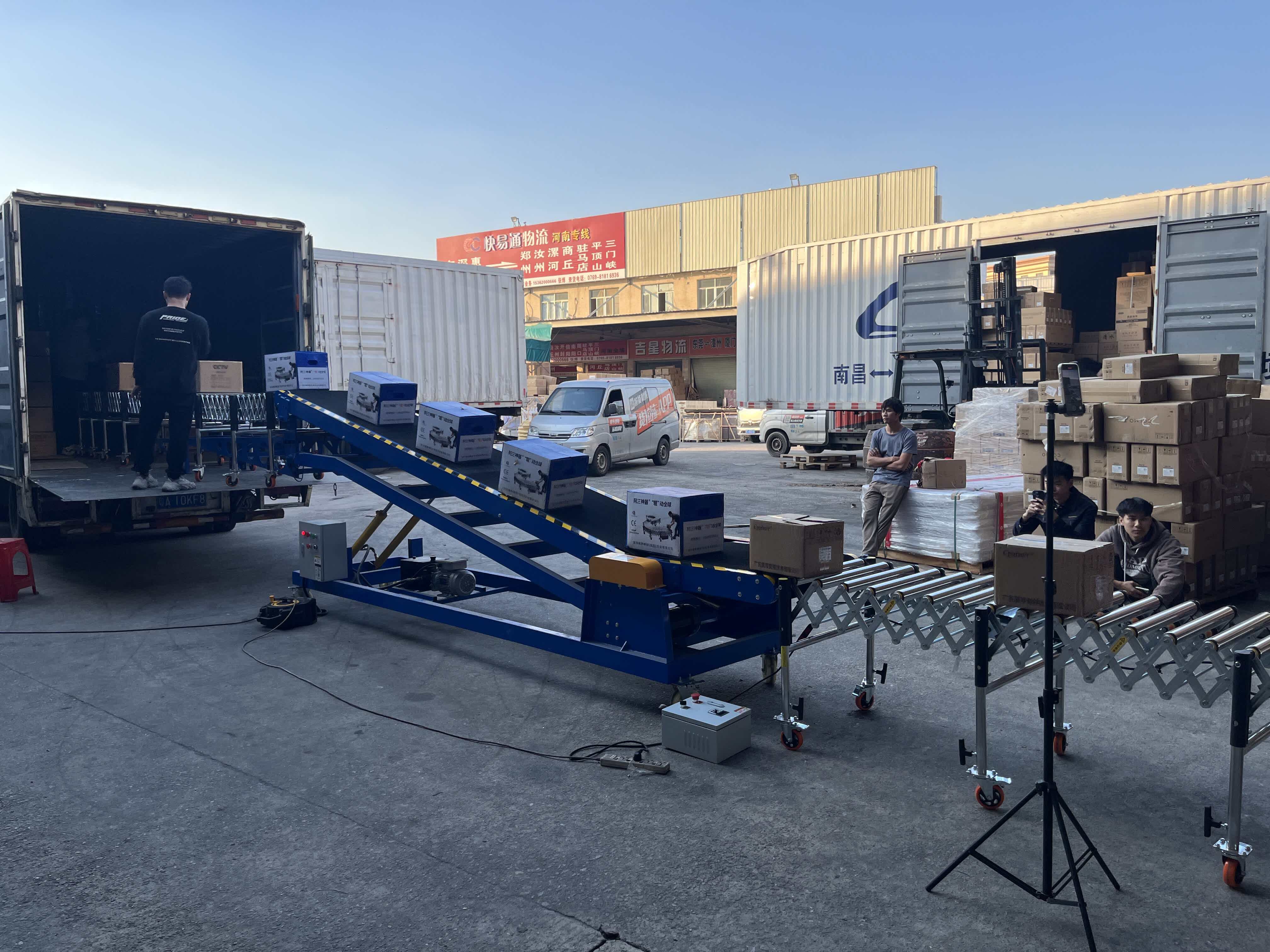
Medium-duty incline conveyor + roller conveyor cargo handling

The 9-section roller configuration provides a total coverage length of 10 meters, satisfying the loading and unloading requirements of 9.6-meter compartments while also delivering effective coverage for 13-meter compartments. The rubber coating improves grip and significantly enhances anti-slip performance, especially when handling bags with smooth surfaces.

Compatibility analysis for loading and unloading 9.6-meter and 13-meter compartments

Loading and unloading requirements for different compartment sizes

The 9.6-meter compartment, as the standard configuration for medium-sized freight vehicles, typically requires the conveyor to cover more than 80% of the compartment length. The heavy-duty incline conveyor paired with the 9-section roller conveyor fully meets this demand, and the 10-meter coverage can even reach the front of the compartment, reducing the manual transport distance.

For 13-meter compartments, even though the compartment length exceeds the conveyor coverage, the effective conveying distance of 10 meters still covers 77% of the compartment length, greatly reducing the area requiring manual handling. In actual operations, operators only need to perform short-distance manual transfers at the front of the compartment.

Equipment configuration and compartment matching plan

The height adjustment function of the lower platform on the heavy-duty incline conveyor is key to matching the compartment. With the manual adjustment mechanism, the platform height can be set to align with the compartment floor, ensuring smooth transfer of cargo from the compartment to the conveyor. This adjustability allows one set of equipment to work with compartments at varying heights.
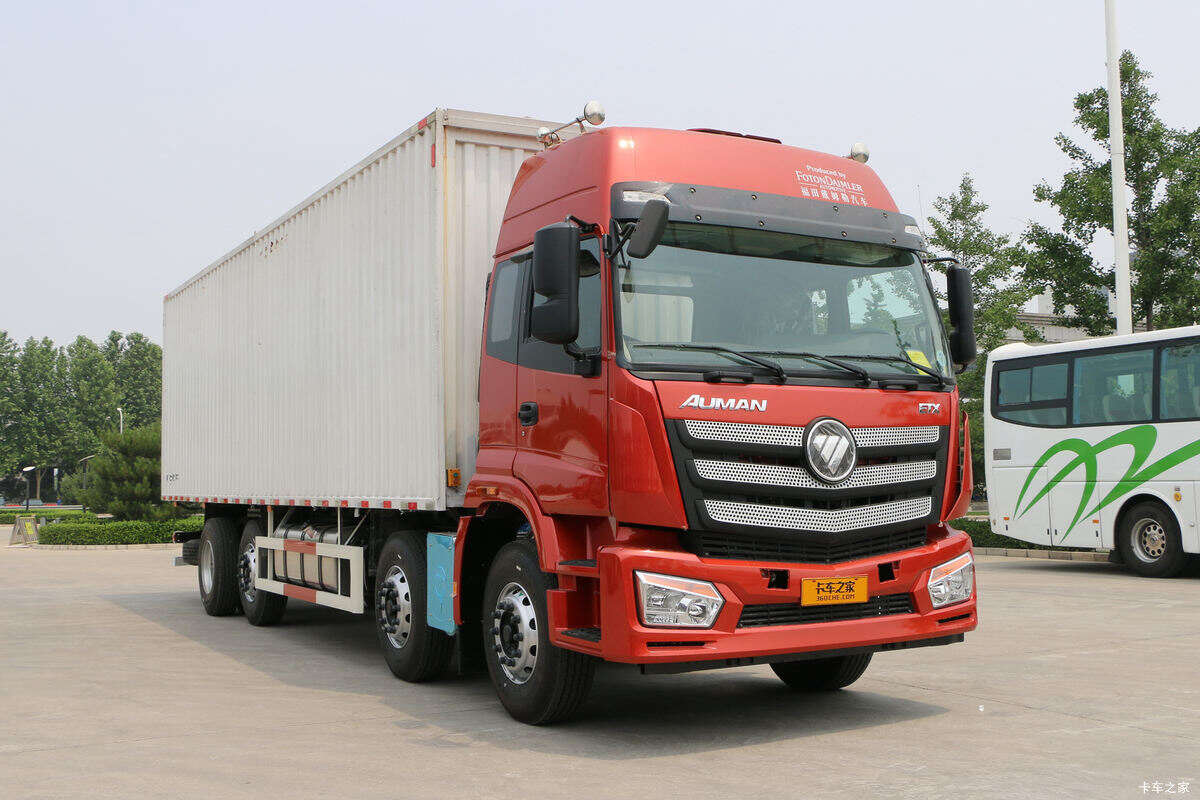
9.6-meter truck
9.6-meter truck

The solution for adjusting compartment height differences relies mainly on the incline angle and platform height adjustment of the incline conveyor. For standard trucks, the platform height is typically set between 1.2 and 1.5 meters, while for low-chassis vehicles it can be lowered further. Efficient use of loading and unloading space is achieved through reasonable equipment layout and operational workflow design.

50kg bagged cargo handling practice

Characteristics and handling requirements of bagged cargo

50kg bagged cargo plays an important role in logistics, commonly found in industries such as grain, chemical raw materials, and building materials. These items are characterized by heavy single-piece weight, irregular shapes, and varying surface materials. Stability on the roller conveyor mainly depends on the bag material and the friction coefficient of the roller surface.

The rubber-coated surface protects bagged cargo in several ways. First, the elasticity of the coating cushions the contact impact between the cargo and the roller, reducing abrasion to the packaging. Second, the textured surface of the coating provides appropriate friction to prevent the cargo from shifting during conveying.

Key cooperation points for manual operation

During the handling of 50kg bagged cargo, coordinated manual operation is essential. Operators need to master proper placement techniques to ensure the bags remain stable on the rollers. In general, the cargo should lie flat on the rollers, avoiding suspended or tilted placement.

Medium-duty incline conveyor + roller conveyor efficiency video

Balancing loading and unloading efficiency with safety requires standardized procedures. Operators should control conveyor speed to prevent instability caused by excessive velocity. At cargo transfer points, install buffer zones to ensure smooth transitions. For heavy cargo, it is recommended to operate with two people for enhanced safety.

Application advantages of the heavy-duty configuration compared to conventional medium-duty incline conveyors

Load capacity comparison analysis

The support structure of the heavy-duty equipment uses thicker steel and a denser reinforcement rib design, capable of bearing greater static and dynamic loads. During continuous operation, the heavy-duty model delivers superior stability and durability.

The 9-section roller configuration offers a clear advantage in conveying distance compared to the 6-section setup. While a 6-section layout usually provides only 6.6 meters of coverage, the 9-section version reaches 10 meters, increasing the coverage area by 51%. This distance advantage is especially important for loading large compartments, significantly reducing manual labor.
Hydraulic Conveyor Series

Hydraulic Conveyor Series

The hydraulic lifting conveyor is designed specifically for warehouses, factories, and logistics sites without loading docks. It enables smooth and sa…

Operational efficiency improvement effects

The stability of the heavy-duty equipment during continuous operation is reflected in multiple aspects. Stronger structural strength reduces deformation and vibration under heavy loads. Additionally, the heavy-duty motor and drive system provide a steadier conveying speed, minimizing fluctuations caused by load variations.

Efficiency gains in large-volume cargo handling mainly come from reducing manual transport distance and improving conveying continuity. When handling 50kg bagged cargo, the heavy-duty configuration can cut manual transport distance from 9.6 meters to less than 3 meters, increasing efficiency by about 70%. Analysis of equipment return on investment and operational costs shows that although the heavy-duty configuration requires a higher initial investment, its efficiency advantages quickly recoup the costs in high-volume, frequent loading operations.

Frequently asked questions

Q: Which compartment specifications suit the heavy-duty incline conveyor equipped with a 9-section roller conveyor?
A: It is primarily suitable for 9.6-meter and 13-meter compartments. The 10-meter coverage fully meets the requirements of a 9.6-meter compartment and provides 77% effective coverage for a 13-meter compartment, significantly reducing manual handling distance.

Q: What protection does the rubber-coated roller offer cargo?
A: The rubber-coated surface has excellent elasticity and friction performance, cushioning the contact impact between cargo and roller, preventing packaging abrasion, and providing sufficient grip to stop cargo from slipping—ideal for bagged goods.

Q: What advantages does the heavy-duty configuration have over medium-duty equipment?
A: The heavy-duty configuration offers significant improvements in load capacity, structural stability, and conveying distance. The 9-section roller increases coverage by 51% compared to the 6-section model, and the reinforced structure ensures stability during continuous operation.

Q: What should be noted when handling 50kg bagged cargo?
A: Manual coordination is needed to ensure the cargo lies steadily on the rollers, control the appropriate conveying speed, and set up buffer zones at transfer points. Heavy cargo should ideally be handled by two people to ensure safety.

Q: What is the height adjustment range of the equipment?
A: The lower platform uses a manual adjustment mechanism, typically ranging from 1.2 to 1.5 meters, allowing it to meet the height needs of different compartments and ensuring the conveyor aligns properly with the compartment floor.

Contact Sales Manager

Contact Person Mr. Chen (Jim Chen)Sales Manager

WeChat
18028941262
WhatsApp
+86 18028941262
Phone
+86 18028941262
Email
jim@naili.ltd
Brand Name
Naili Conveyor | Naili Unloading
Company Name
Naili Unloading Artifact (Guangdong) Industrial Co., Ltd. (Naili Unloading Artifact (Guangdong) Industrial Co., Ltd.)

Factory Strength

Learn about production equipment, workshop environment, processing capacity, and quality control through real photos and videos.
工厂图片 3
Image

工厂图片 3

工厂主图
Image

工厂主图

工厂图片 4
Image

工厂图片 4

工厂图片 1
Image

工厂图片 1

工厂图片 2
Image

工厂图片 2

Related Articles

View All
Analysis of the Throughput Capacity of Loading and Unloading Conveyors

Analysis of the Throughput Capacity of Loading and Unloading Conveyors

The overall throughput capacity of a loading and unloading conveyor is usually determined by two core factors: mechanical conveying capacity (theoretical conveyance limit) and manual loading/unloading efficiency (actual operating output).
Gravity Skate Wheel Conveyor vs. Roller Conveyor: Loading Site Selection Comparison and Practical Guide

Gravity Skate Wheel Conveyor vs. Roller Conveyor: Loading Site Selection Comparison and Practical Guide

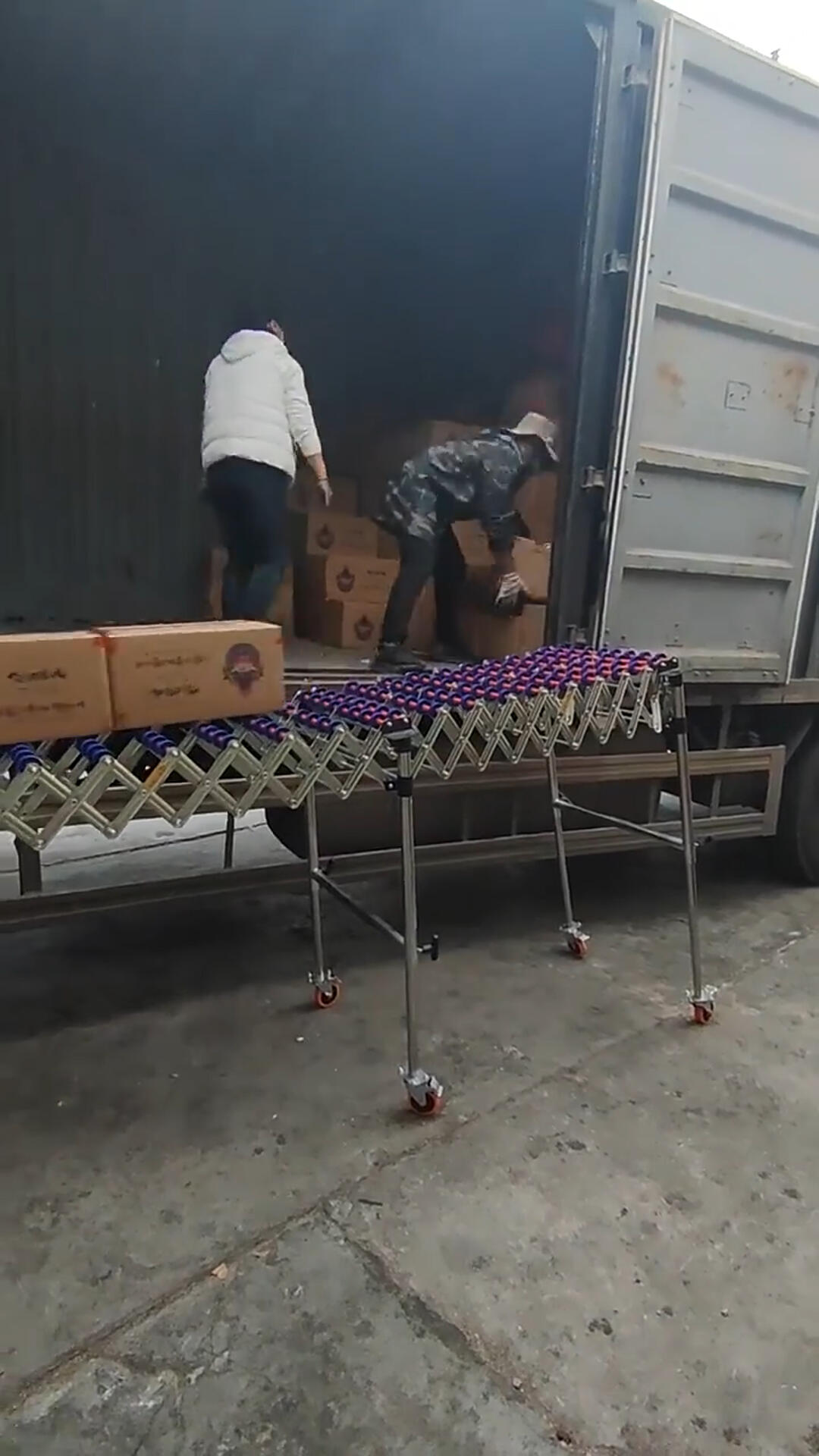
The Gravity Skate Wheel Conveyor is suitable for light loads, short distances, and rapid deployment, while roller conveyors offer stronger load capacity, adapt better to irregular goods, and support inclined conveying. This article explains how to choose from the perspectives of load, structure, cargo type, and cost.
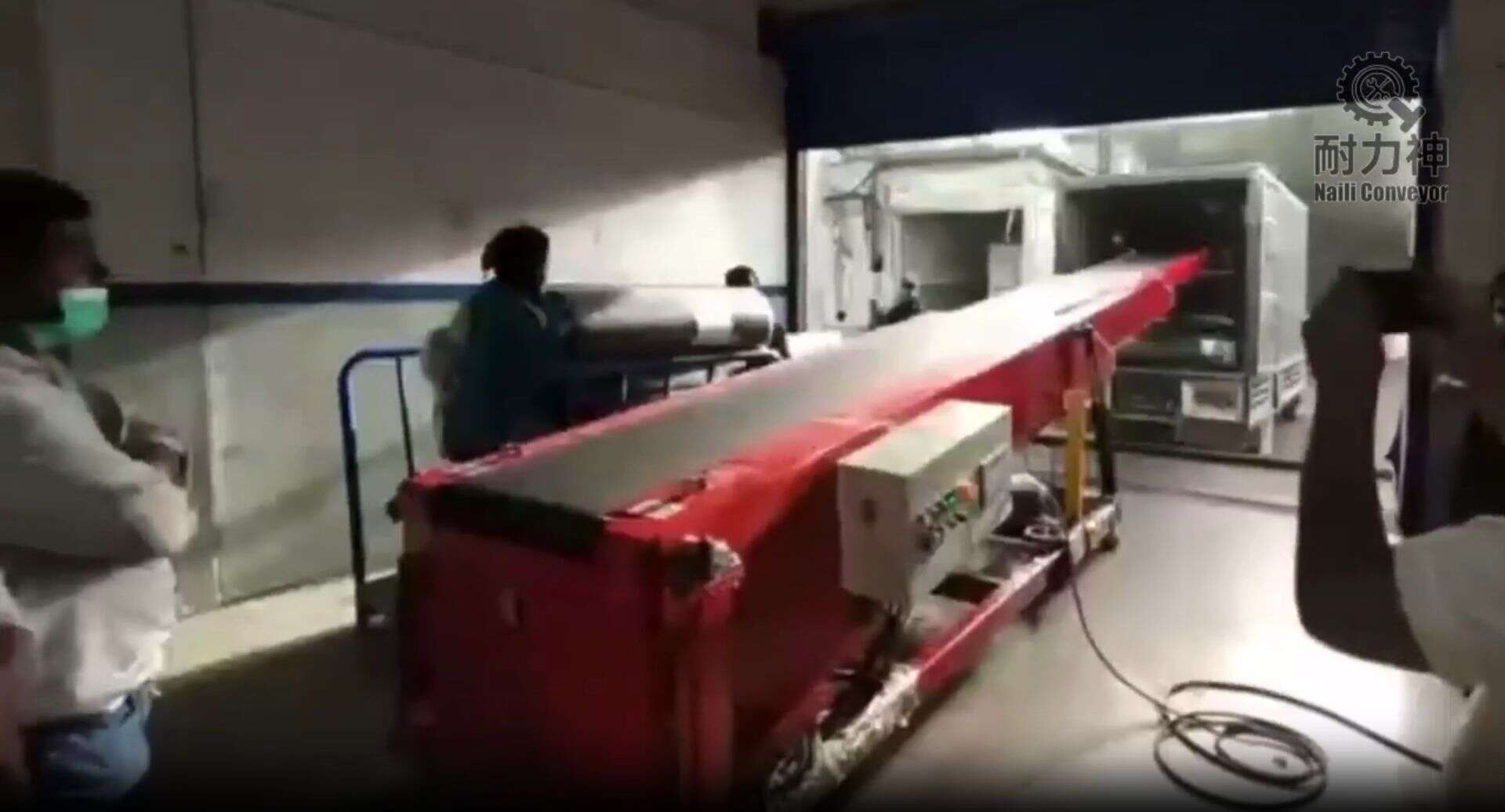
Telescopic conveyors for container loading

Telescopic conveyors for container loading

Telescopic conveyors for container loading are used to load 20-foot containers and 40-foot trailers, bridging the gap between the dock and the trailer interior. They reduce the need for personnel to enter the container for handling, improve continuous loading efficiency, and lower labor intensity and operational risk.
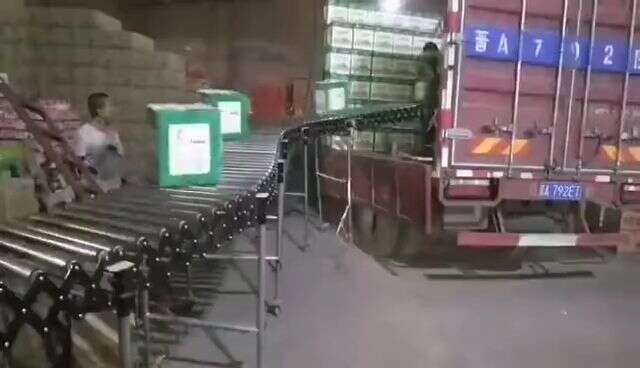
Why are sites without a loading platform more likely to need equipment like the Small Hydraulic Conveyor?

Loading bays without a loading platform are usually troublesome not because "one machine is missing, " but because there is a natural height gap between the ground and the cargo box: today the truck may be a bit higher, tomorrow it may be lower; even on the same truck, different parking angles will shift the docking at the door. Using temporary boards, shims, or manual lifting may work for a short time, but once loading and unloading become continuous or vehicles change frequently, the cycle time gets slowed down by repeated alignment, and safety becomes something that relies on experience.

The Small Hydraulic Conveyor is more like building an "adjustable loading and unloading channel" between the ground and the cargo box. It turns the actions that originally required crossing, lifting, and finding support points into continuous movement along the ramp: people move more steadily, and goods are easier to keep aligned. For many warehouses, the value of this change is not simply "saving effort, " but turning loading into a repeatable daily process instead of an occasional, temporary task.

The significance of hydraulic lifting is not just that it "can be raised, " but that it can align smoothly with different cargo-box heights: there is no need to place timber blocks, find steel plates, or temporarily modify the site every time a truck arrives. Especially in no-dock conditions, uncertainty is already high, and the Small Hydraulic Conveyor turns the step of "alignment" from uncontrollable to controllable, making it easier for on-site staff to shift their attention back to stacking, checking, and turnover—the parts that truly affect output.

"Small" in a site context mostly means "more willing to be used every day": compact structure, easy relocation, and simple operation make it suitable for warehouses, factories, and logistics sites where vehicles and positions change frequently, rather than occupying a fixed dock line for a long time. You can think of it as a movable small ramp—if the boundaries are chosen correctly, it is often more reliable than a temporary bridge.

Unloading from the side of a 9.6-meter truck: Gravity Roller Conveyor connected to warehouse storage position

What really determines whether the Small Hydraulic Conveyor can be implemented is not whether it can raise and lower, but the matching relationship among the cargo box, the goods, and the aisle

When many people first look at a Hydraulic Conveyor, their attention tends to focus on things like the lifting range, ramp angle, and whether it has rollers; but in real-world implementation, what matters more is how the truck opening, cargo shape, and passage continuity fit together. Because once a Hydraulic Conveyor is placed at the truck door, it becomes the most crowded node between people, goods, and vehicles — and whether that node feels comfortable determines whether what you buy is merely "usable" or always a little awkward to use.

First, look at the truck opening method. Side doors and rear doors are not just about where the door is opened; they directly change how the vehicle is positioned, where people stand, and the cargo turning path: side unloading often requires room for movement and turning along the side of the vehicle, while rear-door loading places more emphasis on aligning the passage with the truck bed and reducing diagonal pushing. When you are planning the position of a Hydraulic Conveyor, it is best to think through where people will push, where they will steady the goods, and where they will turn them. If you also need to extend the conveying line further inward from the truck door on site, you can also compare Gravity Roller Conveyor It relies more on the real feel of manual pushing when making the transition at the truck opening.

Next, look at the cargo shape. Boxed goods and turnover crates are easier to connect with rollers, the pushing direction is more stable, and the rhythm is easier to organize; bagged goods, soft packages, and easily deformed cargo often require manual straightening and constant correction, and the "smoothness" of the rollers may actually magnify deviations. When dealing with bagged cargo, you may wish to look at Powered Rubber-Covered Roller Conveyor as an idea: it is not necessarily required, but it can help you build a comparison baseline that is closer to the actual site — do you need something that "moves with a light push, " or something that "runs steadily without wandering off.".

The third factor is passage continuity: are you only missing the "onto-the-truck" step, or do you want a continuous line from the warehouse floor all the way into the truck bed? The former usually puts the focus on docking, lift alignment, and where personnel stand; the latter involves the floor-level roller line, the end transition section, and how people inside the truck receive and stack the goods. If what you want is to "deliver directly from the warehouse into the truck, " you can treat a Hydraulic Conveyor as an intermediate interface in the chain and think ahead about how to connect it with Powered Roller Conveyor so that you avoid buying the Hydraulic Conveyor correctly but ending up with awkward upstream and downstream connections, and finally having to fall back on manual carrying again.

Finally, there are site constraints: does the space allow vehicles to position smoothly, will the equipment placement block the passage, and are vehicles or locations frequently changed? For a Small Hydraulic Conveyor, "compact and easy to move" is sometimes just a bonus, but at other times it is the key to success or failure — especially in places where the loading position is tight against the warehouse door and forklifts and manual handling share the area. If the layout is awkward, it means you are making do every day.

In which situations is a "Small Hydraulic Conveyor + overhead roller conveyor" more worth prioritizing?

When your goal is not only to "get the goods to the truck door, " but also to reduce the human bottleneck at the truck opening so that cargo can enter the truck more continuously, the combination of a "Small Hydraulic Conveyor + overhead roller conveyor" is often more worth prioritizing. The purpose of the overhead roller line is to extend the end of the conveyor into the truck, making the loading action closer to "push + stack" rather than "carry": the people at the door do not have to repeatedly lift the cargo over the threshold, and instead focus more on controlling direction and organizing stacking.

This model group is designed for trucks with a truck-bed length no greater than 9.6 meters, and the overhead support can be matched with a roller conveyor up to 9 meters long. When understanding this sentence on site, do not just see it as "how long it can be made"; instead, treat it as a chain-matching issue: when the truck-bed length and the overhead roller coverage fit more closely, the personnel’s work radius becomes clearer — which goods can be pushed directly into place, and which need a second handoff inside the truck, making the whole process easier to organize. If you want to further feel the rhythm difference of a "powered section directly connected to the truck bed, " you can also take a look at multi-V belt Powered Roller Conveyor in this more common continuous conveying form in the loading chain.

What really needs to be verified is whether the docking logic feels smooth: the height at the truck door changes, the vehicle position may have deviations, whether the end section is stable, whether the layout is easy to adjust, and whether cargo may get stuck or shift during the transition — these are more important than simply "looking complete." Many loading-site problems come from the last half meter: if the transition section is not smooth, the cargo will skew at the door, get squeezed, bounce back, and in the end still require brute-force manual adjustment.

An overhead roller line is not necessarily better the longer it is. The deeper the coverage, the more the coordination method of the people stacking cargo inside the truck needs to be adjusted: do you want to place the emphasis on pushing from outside the truck, or do you want less handoff inside the truck and more reliance on the extended section? Different choices correspond to different congestion points and risk points. If your loading position often needs to "extend in and retract" to clear the passage, you can compare Telescopic Conveyor the approach with; its combination method with a Hydraulic Conveyor is different, but it can help you think more clearly about the boundary between "occupying passage space" and "storage.".

Loading and unloading case at a warehouse center: Medium Hydraulic Conveyor + multi-V belt Powered Roller Conveyor directly connected to the truck bed and floor roller line - 1

For Hydraulic Conveyor, the difference between the small type and the light/medium/heavy types is often reflected in the trade-off between "work intensity and stability redundancy"

Even though they are both called Hydraulic Conveyor, the difference is often not whether it can lift or push, but rather the ability to absorb operating fluctuations: work intensity, cargo weight structure, continuous operating time, and how rough the site is will all amplify fluctuations at the ramp docking point. With no loading dock, uncertainty is already high — vehicle positioning errors, fluctuations in truck-bed height, and differing operating habits between teams. If the model is selected too tightly, these "small deviations" will turn into frequent stoppages, and may even force operators to use riskier actions to compensate for the equipment’s limits.

The positioning of the small type emphasizes compactness and flexibility more, which also means you need to think more clearly about the usage boundaries and the loading organization method: do you want it to handle "small and medium warehouse loading stations with flexible mobility, " or "long-duration, high-frequency continuous loading"? If your site needs something lighter, and values portability and quick setup more, it is recommended to use Micro Hydraulic Conveyor as a comparison reference to see the trade-offs of a lightweight solution in terms of on-site convenience.

If your pace is closer to the high-frequency loading of a standard warehouse, and the chain places more emphasis on continuous conveying and stable connection, then compare Hydraulic Conveyor classification the medium-type solution will be more meaningful: what you need to compare is not "which one is bigger, " but whether the stability redundancy is better suited to the fluctuations of your site.

And when the load is heavier, the strength requirements are higher, and the environment is rougher (for example, uneven floors, frequent forklift interference, and a high collision risk), many sites will tend to put "reliability" first, and at that point they will look at Large Hydraulic Conveyor which will better match the real decision-making path: it is not about pursuing a larger machine, but about making sure small daily mistakes do not interrupt the entire loading chain.

Where does the price difference usually come from: both are called "Small Hydraulic Conveyor, " but the scope of the solution may be completely different

When it comes to pricing, the easiest misunderstanding is this: everyone is talking about "Small Hydraulic Conveyor, " but the scope each person has in mind is completely different. Some refer only to the Hydraulic Conveyor itself; others already include the top roller line, the floor roller section, and the end transition section as one integrated chain. Once the system boundaries are inconsistent, no matter how you compare them, it is like comparing a "half solution" with an "entire chain." So before you ask for a quote, it is best to clearly state your "quotation boundary" in one sentence: do I need only the loading ramp itself, or do I need a continuous passage extending from the warehouse floor all the way into the truck compartment?

The second difference comes from the amount of on-site adaptation work. Different truck body types, station positions, and passage widths will change the equipment positioning method and protection approach: in some sites, the truck door area is very tight, so the equipment needs to be positioned more carefully; in others, frequent relocation is required, so storage and movement become part of the user experience. You will find that, although the Hydraulic Conveyor may look the same, the differences often come from these details when it comes to "whether it can be used easily every day.".

The choice between powered and unpowered is often another dividing line. It is not just a difference in conveying format; it also changes how people push the load and how stable the rhythm is. Gravity rollers rely more on continuous manual pushing and correction, making them suitable for scenarios with coordinated manual work and smooth-moving goods; Powered Roller Conveyor can hand over a more stable pace to the equipment, but you need to consider start-stop control, product spacing, and the receiving method at the end of the line. If you are not sure which path suits you better, you can start by comparing the floor section, for example: 50 mm Gravity Roller Conveyor is more commonly used in setups that rely on manual pushing, while O-type belt Powered Roller Conveyor is more commonly seen in light-load conveying sections with controllable pacing.

Finally, "customization" here is not a gimmick, but a respect for boundaries: when the site has requirements for turning, interfacing with other equipment, passage occupancy, or storage methods, you need to make trade-offs between a compact structure and stable use. Talking through these trade-offs in advance actually saves more time—because you are not buying a "machine that can lift and lower, " but a loading passage that can run smoothly for the long term.

Maintenance and safety risks often appear at the "interface points" and in "human actions": clarify the responsibility boundaries in advance

For the Hydraulic Conveyor, maintenance and safety are often not about whether the equipment itself breaks down, but whether the interface points and human actions are taken seriously. The truck opening, ramp transition, and the end of the roller line are the places where jamming, falling, and collisions are more likely to occur; once they do, the site often compensates with greater force and more abrupt movements, which amplifies the risk in a chain reaction. Rather than waiting for problems to happen, it is better to clarify the transition method and operating rhythm during the solution stage: who receives the goods at the doorway, where alignment is needed, and where a brief pause is allowed.

When safety and efficiency are viewed together, the key still comes down to "how people move." The matching of actions such as pushing, straightening, turning, and stacking with the equipment rhythm determines whether the site works in smooth coordination or is constantly fighting the pace. This is especially true when you use Powered Roller Conveyor: cooperation between the inside and outside of the truck must be smooth. If the outside pushes too fast and the inside cannot receive the goods, products will pile up at the door; if the inside stacks too slowly and the outside keeps forcing them forward, they will be crushed and deformed. You can refer to Chain Powered Roller Conveyor This kind of solution leans more toward "stronger drive and better site toughness." It does not necessarily mean it is the right fit for you, but it does serve as a reminder: once the drive capability is increased, the way people cooperate must be adjusted accordingly as well.

Hydraulic lifting brings the advantage of adapting to different truck body heights, but it also requires a clear docking and adjustment method: if loading and unloading continue before the truck is fully aligned and stable, the risk will spill over to the ramp end and the truck door area, creating the typical dangerous action of "goods sliding down and people instinctively trying to stop them." What the site really needs is not a complicated process, but a stable habit: align first, then move forward; if a deviation is found, stop briefly to adjust instead of forcing the deviation through with brute strength.

Mobility is also a double-edged sword. If the equipment needs to be moved frequently, you must consider where it will be stored, how much passage space it occupies, and how to form a unified approach to positioning: where to place it so it does not block vehicles, where to push it out from for the smoothest movement, and who is responsible for returning it to position and doing a simple inspection. Otherwise, "easy to move" can easily become a hidden cost in site management—if the equipment ends up in a different place every time, the site has to detour and reposition every time as well.

Use cases to bring "whether it can be used" into the real site: looking at the role of the Small Hydraulic Conveyor in the loading chain

The most effective way to judge whether the Small Hydraulic Conveyor is suitable for you is not to look at the spec sheet, but to place it in your loading chain and think through it: how the floor section organizes the goods to the ramp entrance, how the Hydraulic Conveyor completes the truck-loading interface, and how the last section is completed inside the truck by an extension section or manual stacking. Once the chain is smooth, you will find that many problems are not actually with the equipment itself, but with the interfaces and the station positions.

If what you care about is the real-world scene of "a Small Hydraulic Conveyor paired with a long roller line to send goods directly into the truck compartment, " you can take a look at Case of loading a container with a Small Hydraulic Conveyor and a 9-meter roller line. What makes it worth seeing is not how fast the result is, but what you can observe from it: how the end section extends in, how the doorway transition is handled, and how people divide work inside and outside the truck—these details will help you compare it with your own site most effectively.

If you are more interested in how to organize a more continuous loading passage using "Hydraulic Conveyor + Powered Roller Conveyor, " you can refer to Truck loading: a case of Powered Roller Conveyor paired with Hydraulic Conveyor. It is recommended that you look at it with these questions in mind: how the floor section connects to the ramp, whether products tend to pile up at the door, and how the stacking rhythm inside the truck can keep up.

And if your goods are closer to bagged materials, are easy to deform, or you are worried about slipping and deviation during pushing at the doorway, you can also take a look at Case of conveying bagged powder with a rubber-covered roller conveyor. It is not necessarily a loading scenario, but it is very helpful for understanding how goods move steadily on rollers, and it can help you shift your focus to friction, correction, and manual actions when comparing solutions.

If you want to widen the comparison range, go back to Hydraulic Conveyor category page To understand the adaptation boundaries of light, medium, and heavy models, it becomes easier to establish a comparison baseline; if you want to continue reviewing how the loading chain is connected, you can look at one or two similar scenarios from the case studies, see clearly how the equipment is connected, how the operators stand, and how the cycle runs smoothly, then come back and decide the boundary of your solution.