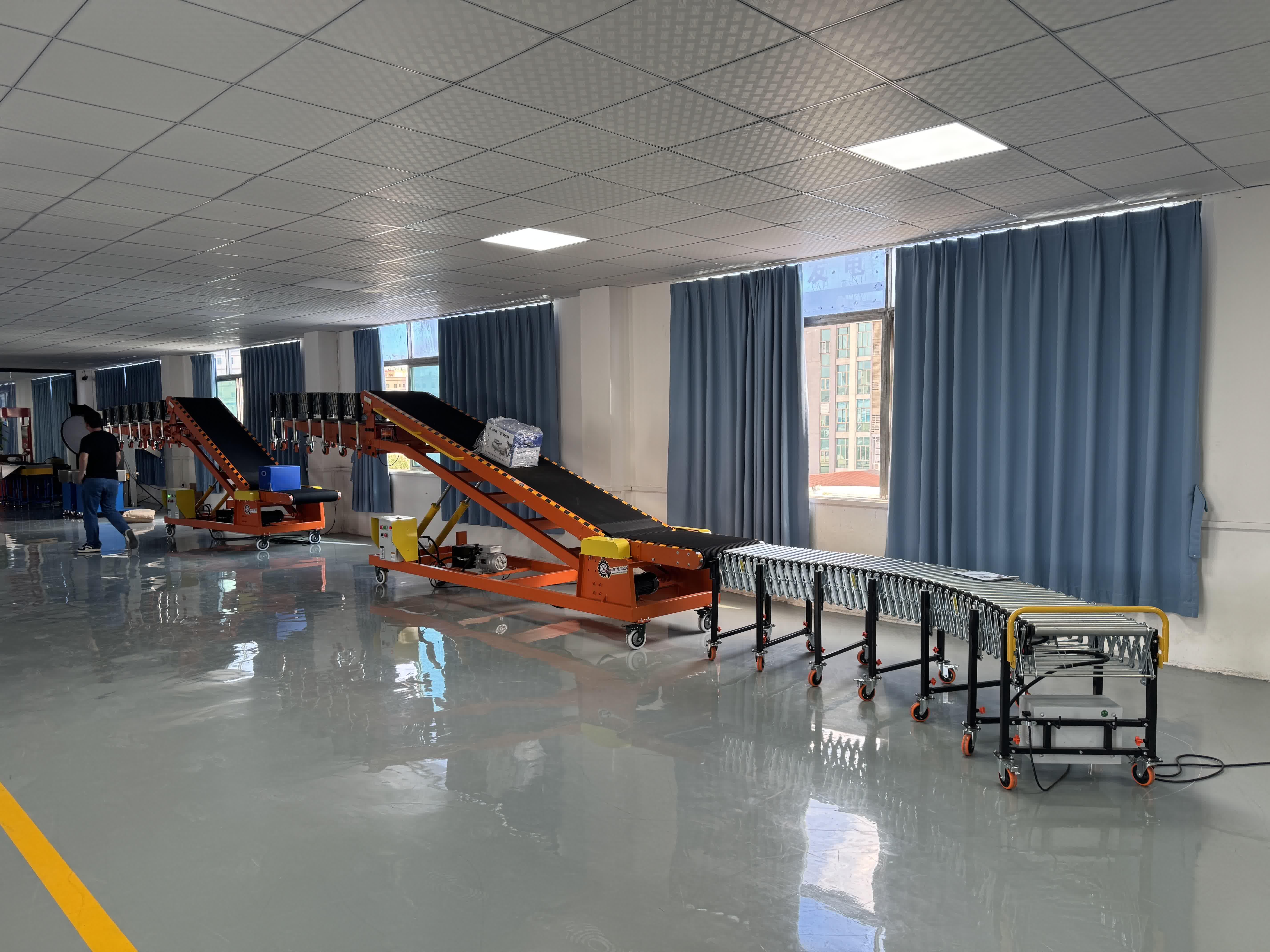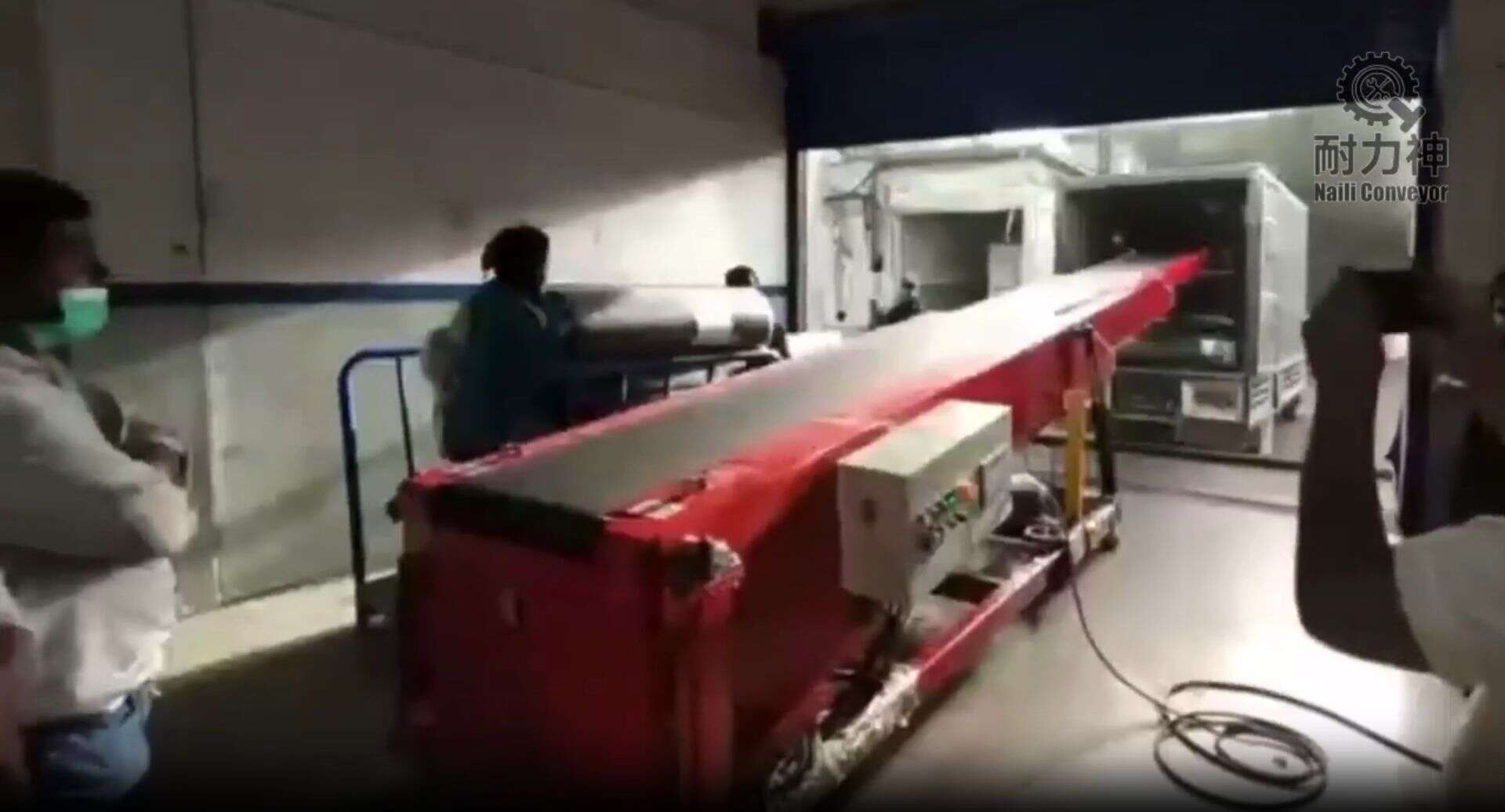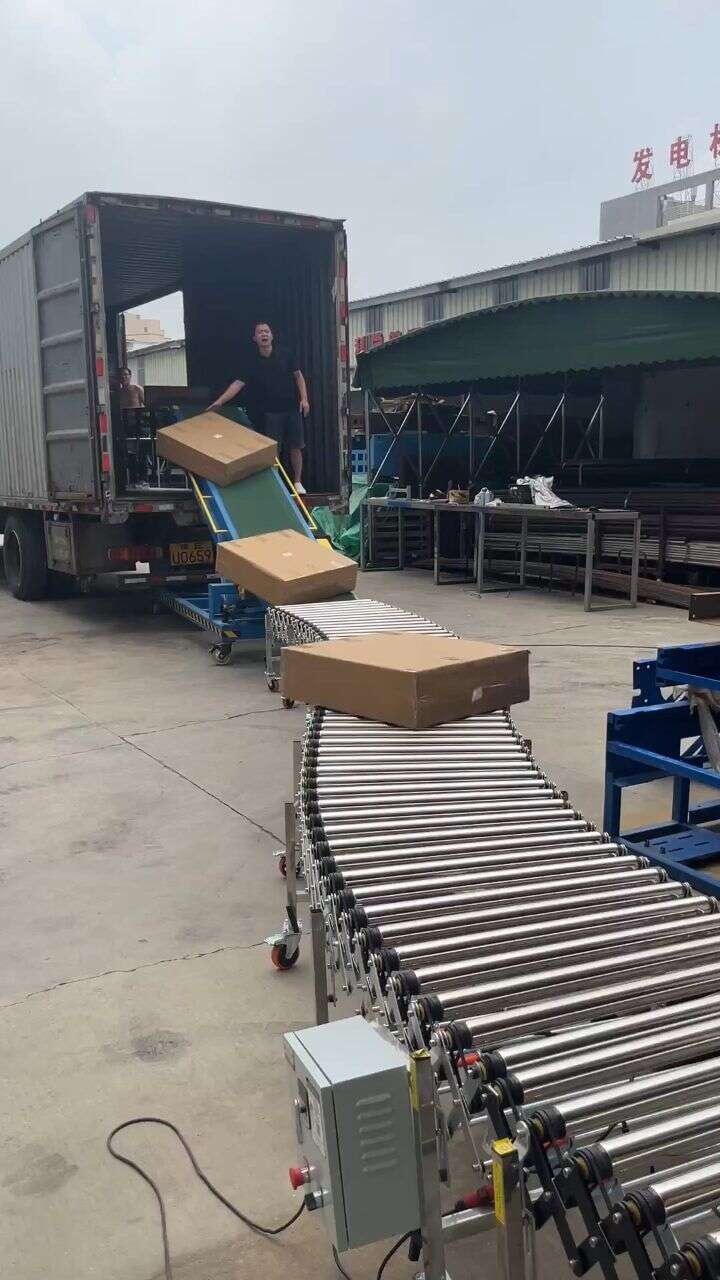
In the daily operations of logistics warehouses and manufacturing companies, loading large and heavy boxed goods into standard containers is a common but challenging task. Traditional manual handling is not only inefficient and labor-intensive, but also carries significant safety risks. To address this pain point, we designed a loading and unloading solution for our customer that combines a Small Hydraulic Conveyor and a Multi-Wedge Belt Powered Roller Conveyor, specifically for smoothly and efficiently conveying large boxed goods into the container.
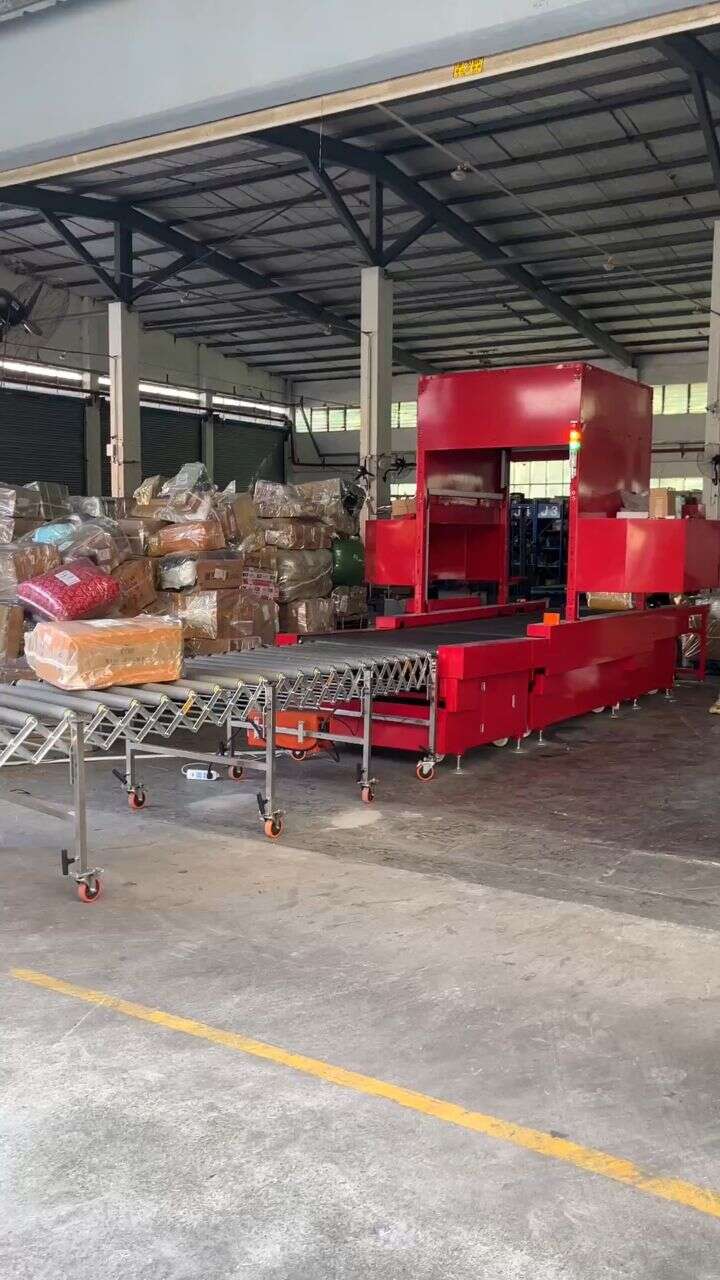
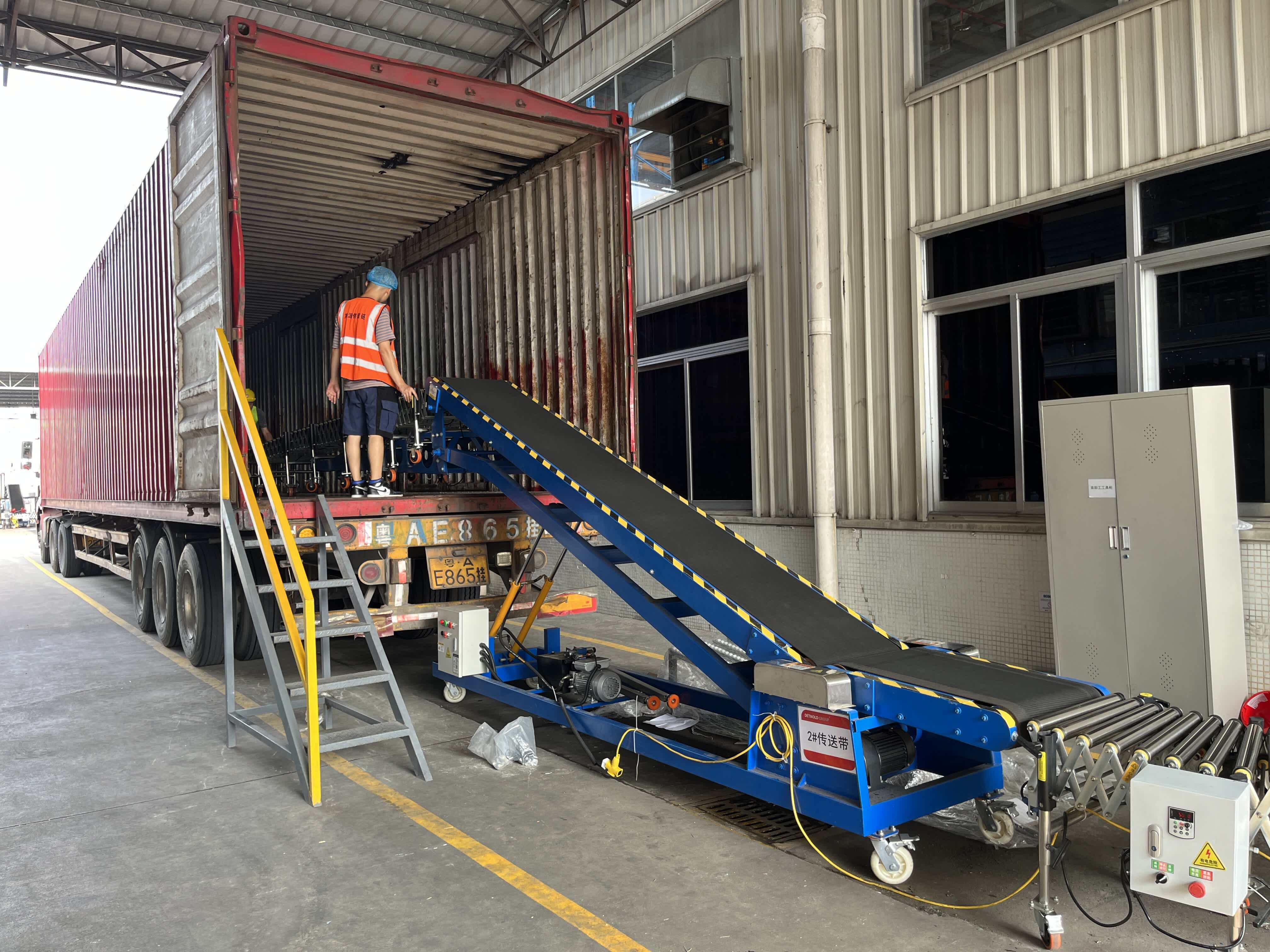
The core equipment of this solution is a Small Hydraulic Conveyor and a Multi-Wedge Belt Powered Roller Conveyor with a total length of about 9 meters. The ramp conveyor is responsible for overcoming the height difference from the ground to the container tailboard (or interior), achieving lifting of the goods; the powered roller line is responsible for long-distance conveying on horizontal or slightly inclined sections, delivering the goods from the warehouse entrance all the way to the deep inside of the container.
Key Role of the Small Hydraulic Conveyor
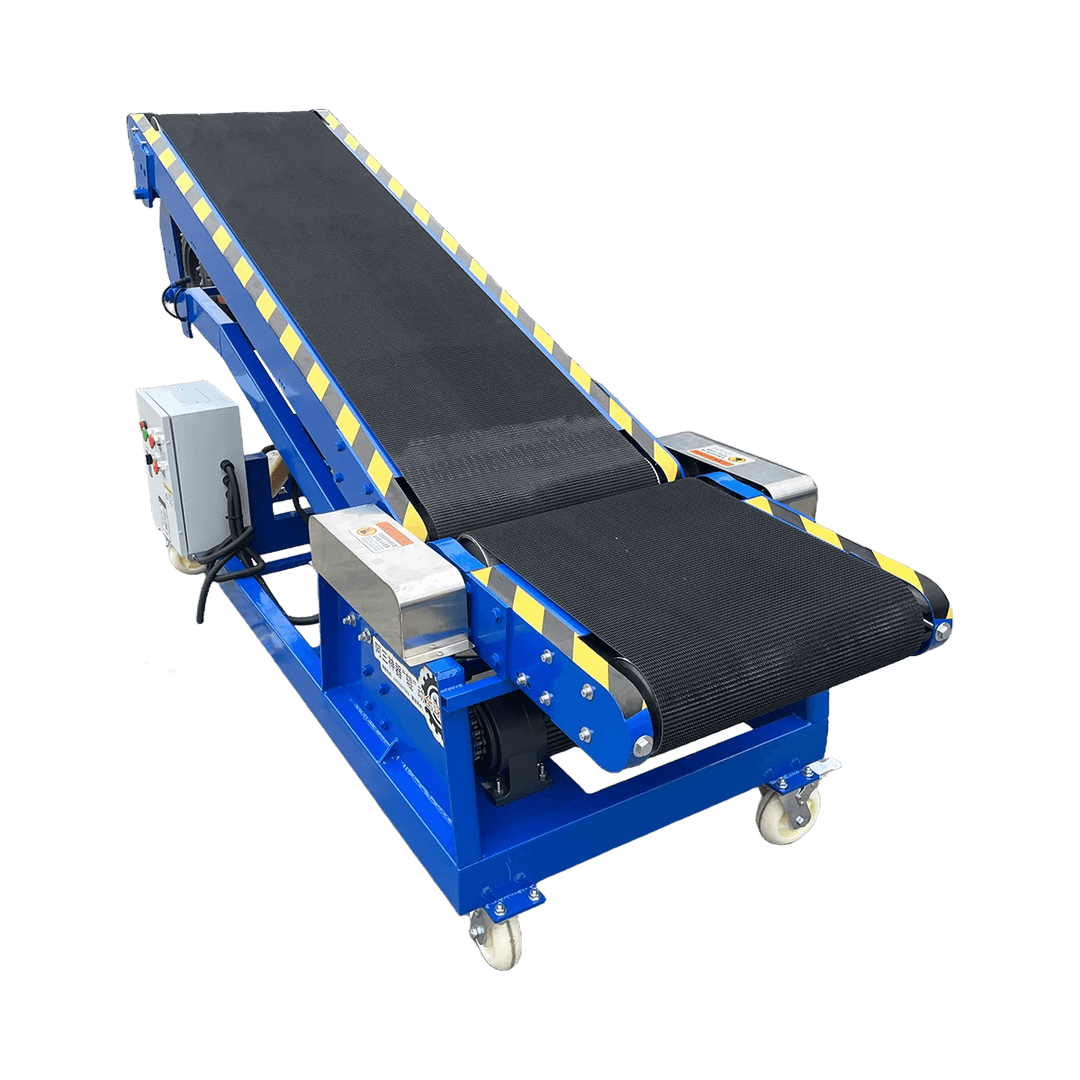
Small Hydraulic Conveyor
Small Hydraulic Conveyor is designed specifically for sites without a loading dock and is suitable for trucks with cargo beds up to 9.6 meters long. T...
 Metal Drum
 Plastic Drum
 Roll
Roll
 Carton
 Bagged
The Small Hydraulic Conveyor plays the role of a "bridge" in this solution. With a total length of about 5.4 meters and hydraulically driven operation, the conveyor surface angle can be steplessly adjusted within a certain range, perfectly adapting to the gap between container tailgates or platforms and truck compartments of different heights. The equipment adopts a sturdy steel structure, and its load capacity meets the bearing requirements for large boxed goods. The anti-slip, wear-resistant surface of the conveyor belt ensures that cartons or wooden boxes will not slip or tip over during the ramping process. Operators can easily control the equipment's lifting, lowering, and start/stop functions with a handheld remote, enabling precise docking.
Extension Conveying with a 9m Multi-Wedge Belt Powered Roller Conveyor
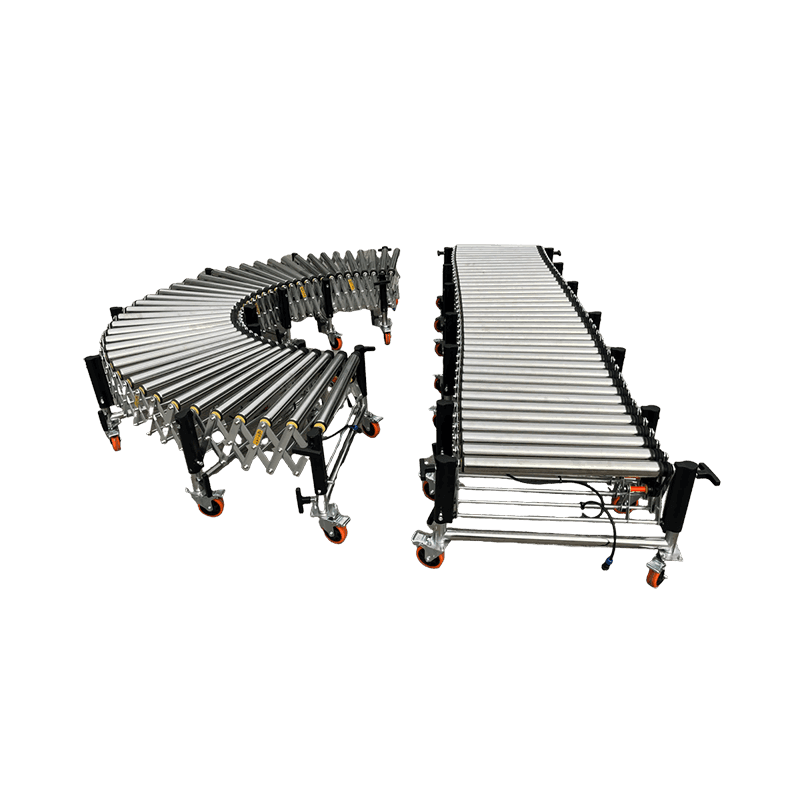
Powered Roller Conveyor Series
The powered roller conveyor is designed specifically to meet conveying needs for the final stretch of loading and unloading, enabling continuous and s...
Plastic Drum
Metal Drum
Carton
Roll
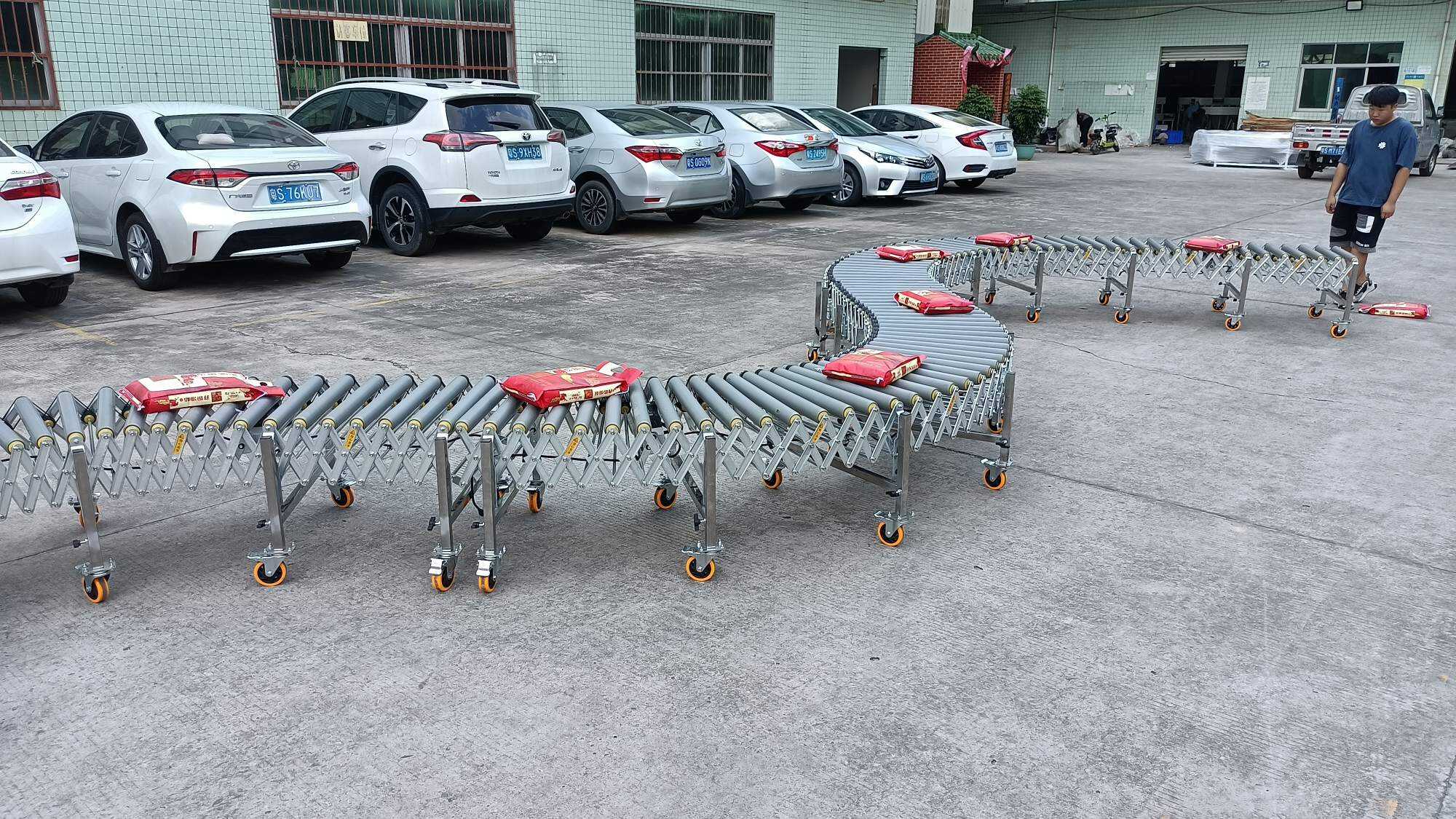
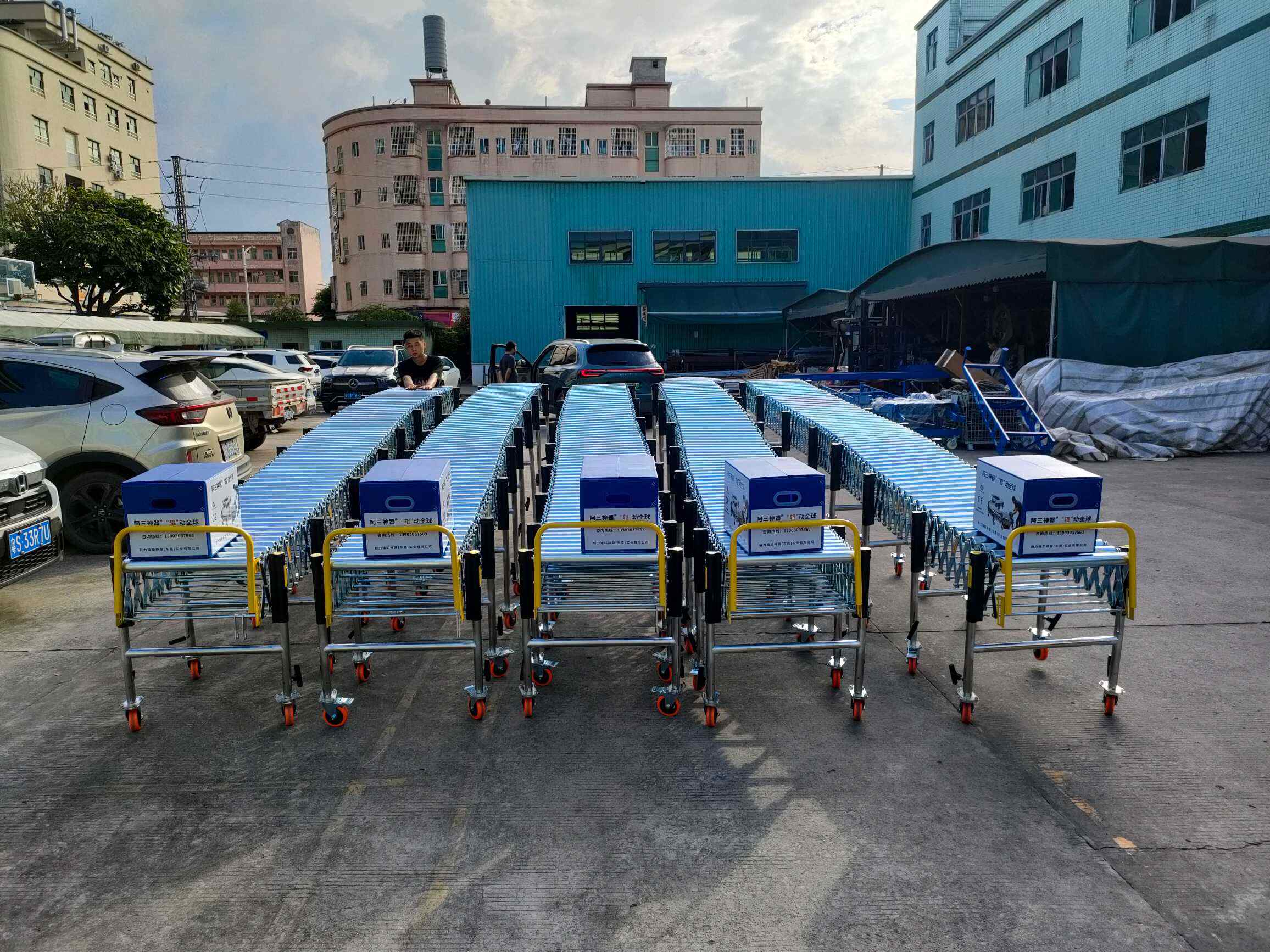
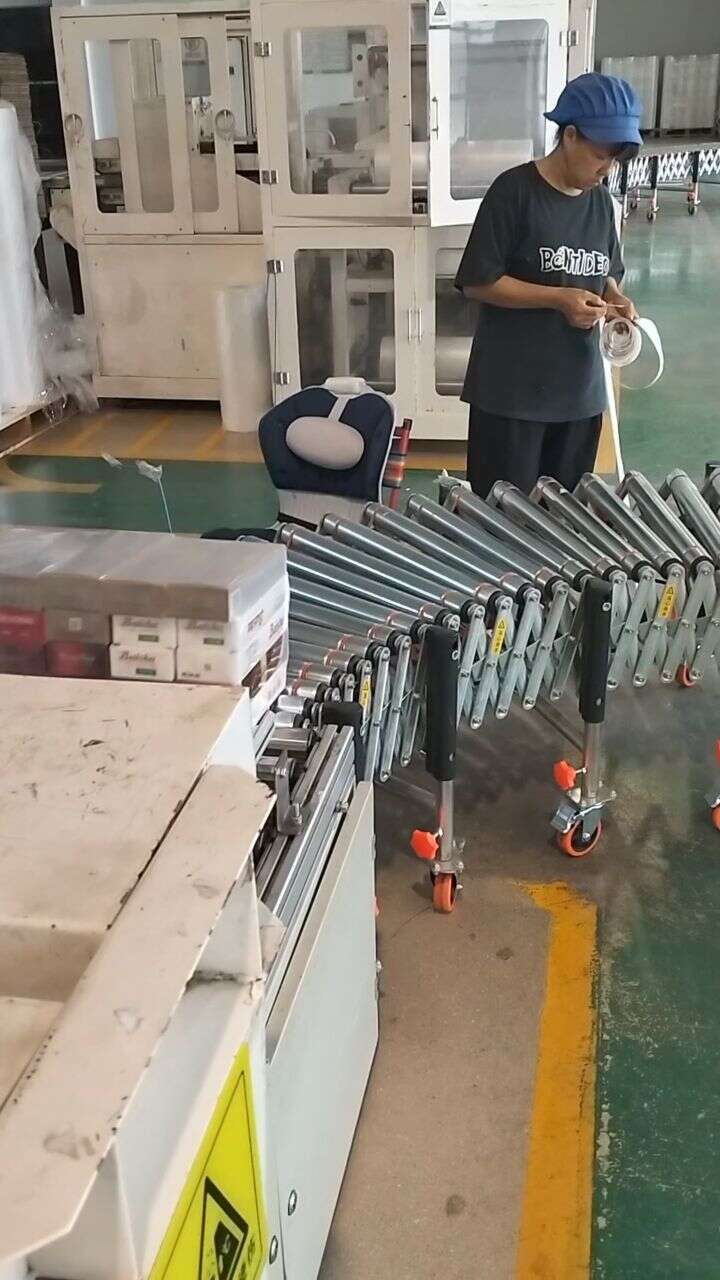
To convey the goods deeper into the container, we configured a Multi-Wedge Belt Powered Roller Conveyor with a total length of about 9 meters. The multi-wedge belt drive runs smoothly, with low noise, and provides sufficient driving force to move heavy boxes. The roller line can be flexibly assembled into a straight line according to the on-site layout and directly connected to the discharge end of the ramp conveyor. After the ramp conveyor lifts the goods to the height of the container floor, the goods naturally transition onto the powered roller line, which then continues to convey them to the designated stacking position. This design avoids the difficulty of manually carrying goods over long distances inside the narrow container.
Actual Loading and Unloading Process and Advantages
In actual operation, after the goods are packed in the warehouse, they are placed on the starting end of the powered roller line by a forklift or manually. After the system is started, the goods are first conveyed horizontally by the roller line, then lifted to the height of the container floor upon reaching the ramp conveyor entrance, and finally stacked after being transferred onto the roller section extending into the container. The entire process is continuous and smooth.
The advantages of this combined solution are significant:
- Improved Efficiency: Mechanical conveying replaces most manual handling, greatly increasing loading speed.
- Labor Savings: Operators only need to place and organize the goods at both ends, greatly reducing labor intensity.
- High Safety: It avoids the risk of back injuries or goods falling that may be caused by manually carrying heavy items into the truck compartment.
- Good Adaptability: The height adjustability of the ramp conveyor enables it to handle different loading and unloading site conditions.
This combination of a small ramp conveyor and an extended roller line is especially suitable for scenarios with not extremely high loading and unloading frequency, but where the individual goods are relatively heavy and large in volume. It is a practical choice for improving the efficiency of container loading. Similar application ideas can also refer to Medium Hydraulic Conveyor + Roller Conveyor Unloading Case for a detailed introduction to the equipment collaboration in unloading scenarios.