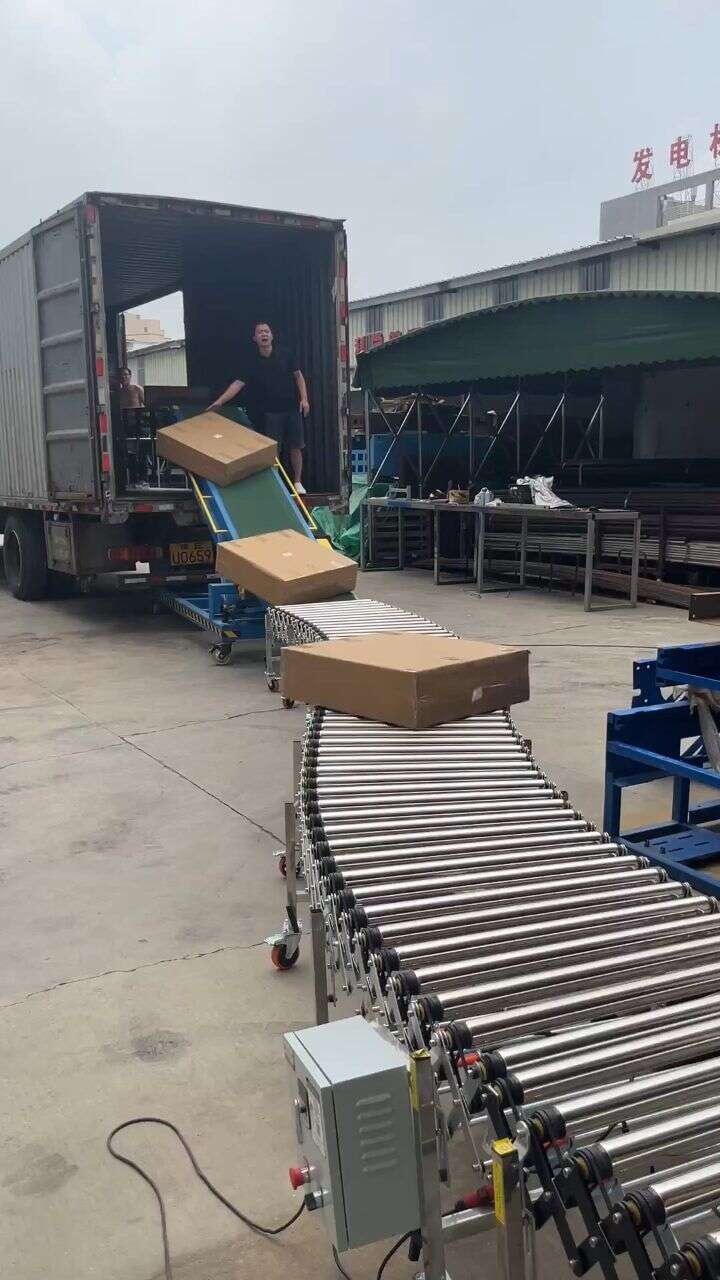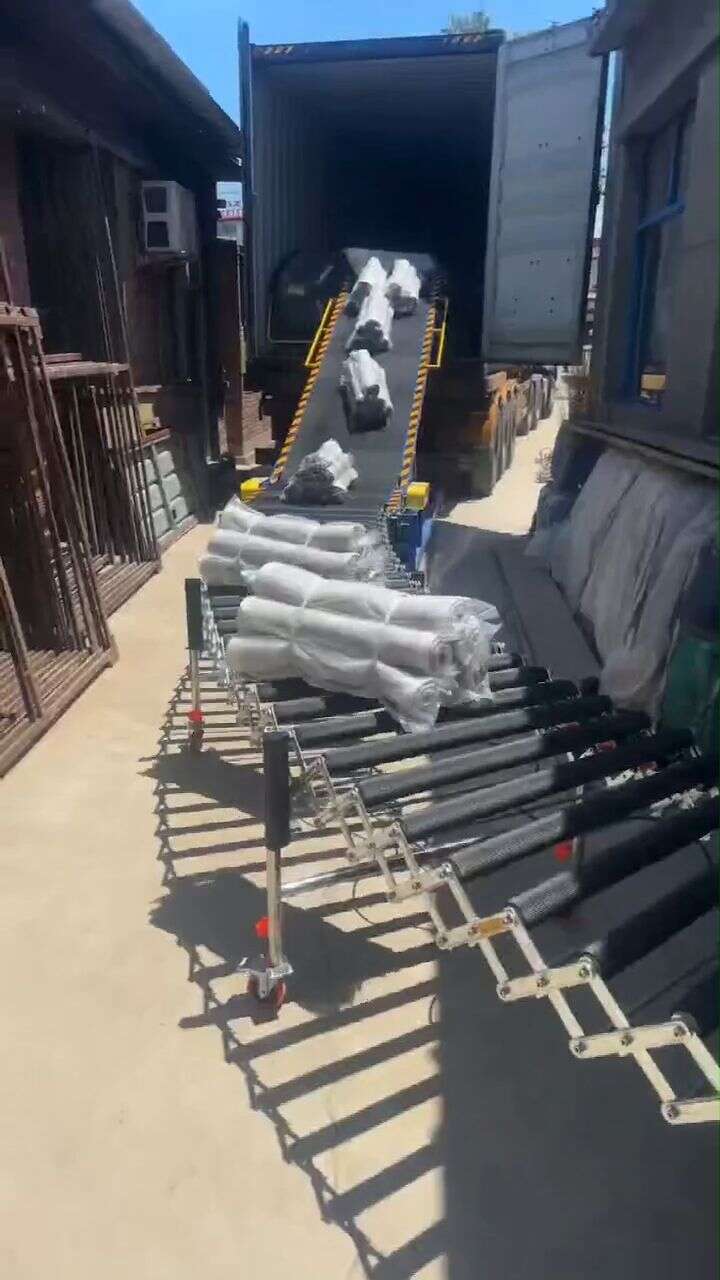
A 7.6 m truck parks at a work area without a loading dock. The cargo bed must dock directly with a medium hydraulic conveyor, using its hydraulic lift to connect the truck-bed surface to the ground conveying section. The goal is to convey goods all the way from the truck-bed floor to the second floor of the warehouse. The process must accommodate different packaging forms such as metal drums, plastic drums, and cartons, ensuring each package type can transition smoothly to the downstream drive structure.
How the Solution Connects
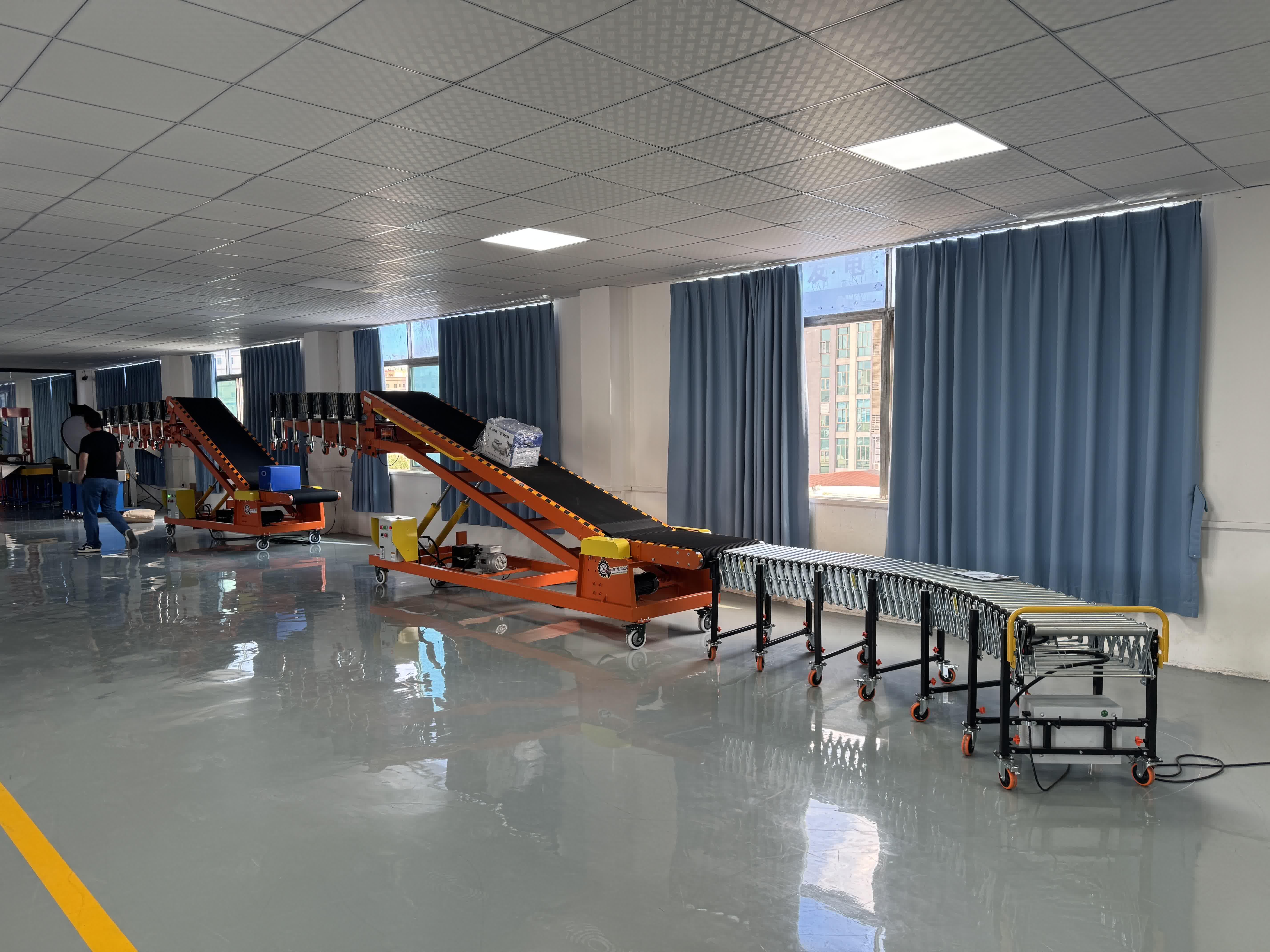
The top bracket of the medium hydraulic conveyor connects to the starting section of a multi-wedge-belt powered roller conveyor, extending the rollers along the incline direction and forming a tunnel-like continuous passage from the ground to the second floor. Goods flow from the top of the hydraulic conveyor into the roller section; with traction maintained by the multi-wedge-belt drive, the risk of bounce-back and hang-ups is reduced as they advance smoothly toward the second-floor entrance.
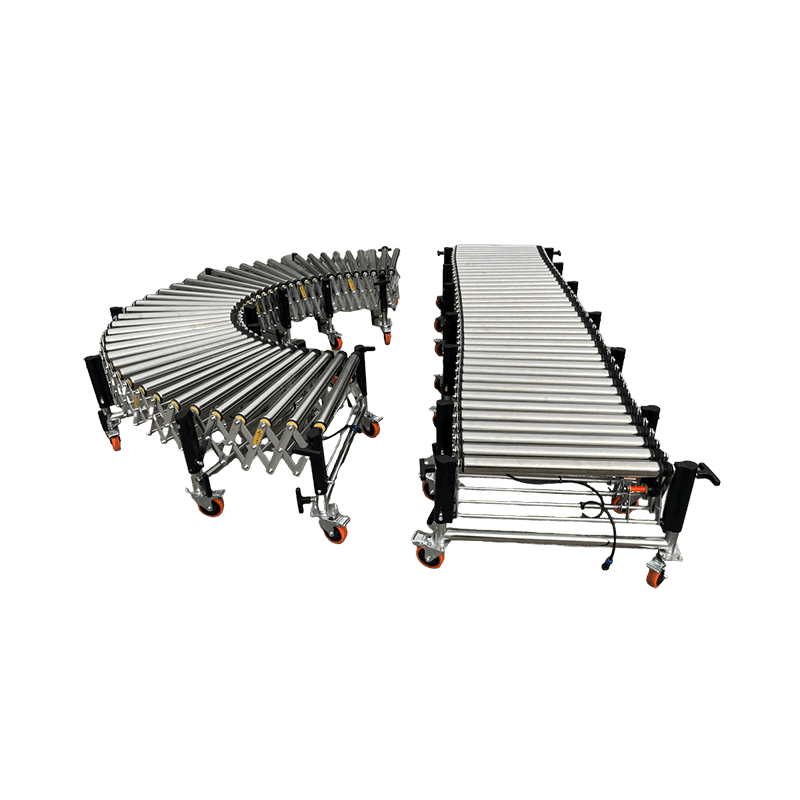
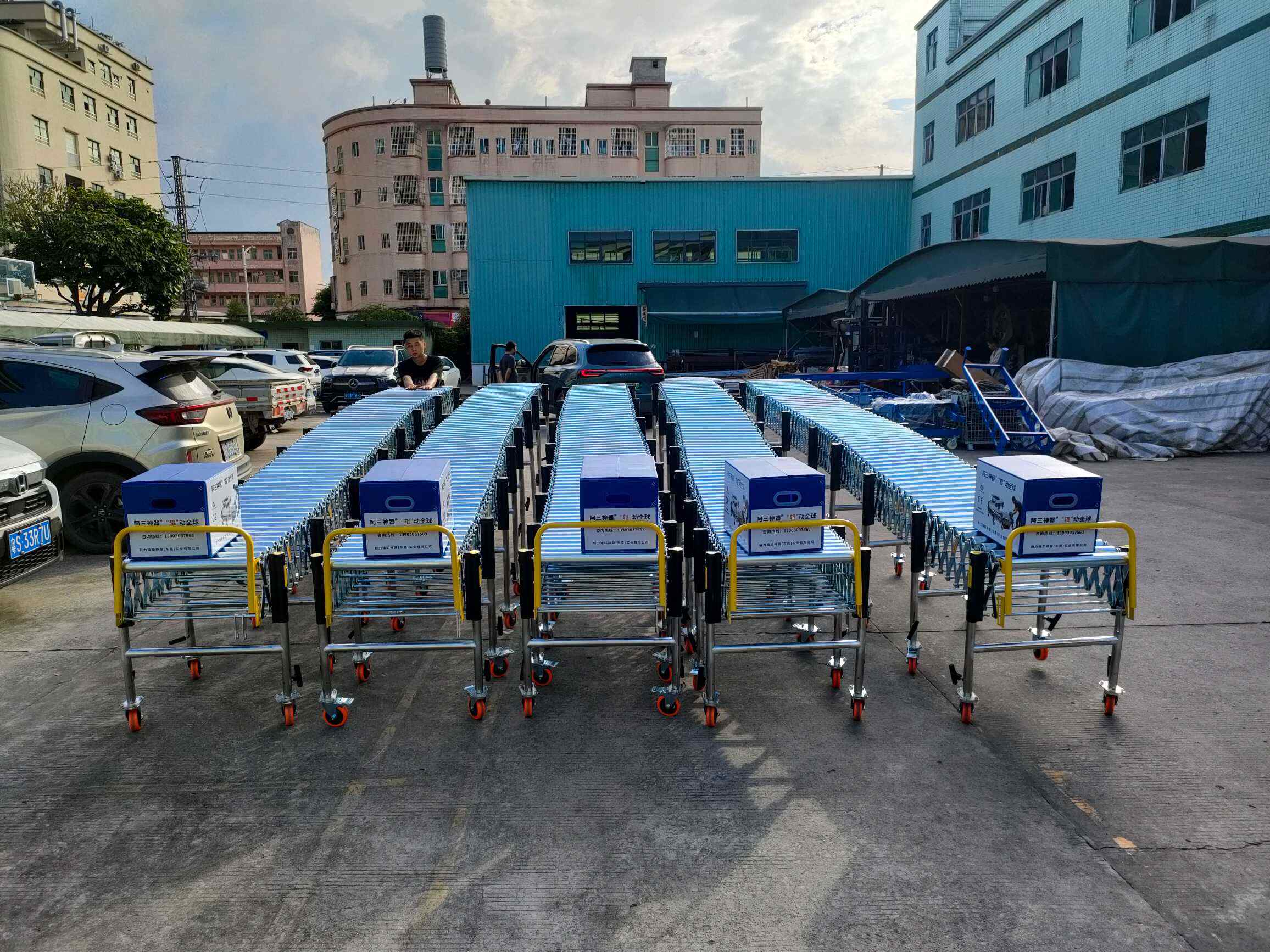
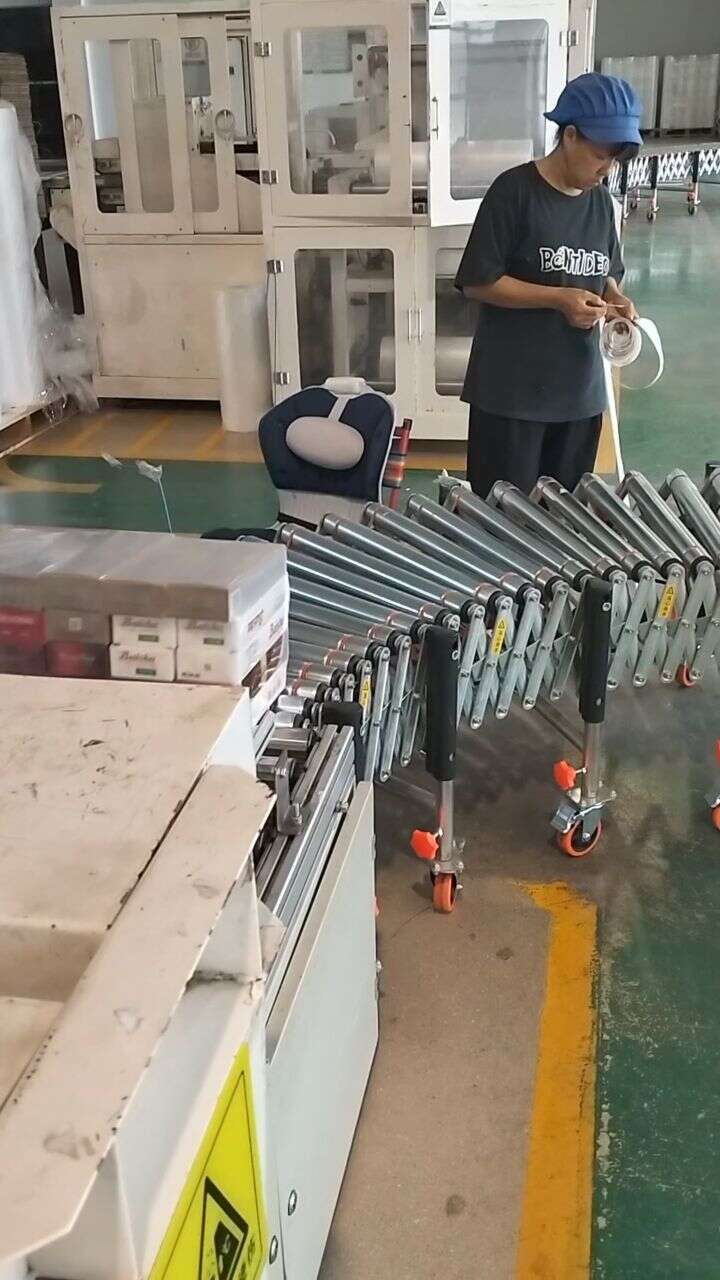
Multi-Wedge Belt Powered Roller Conveyor
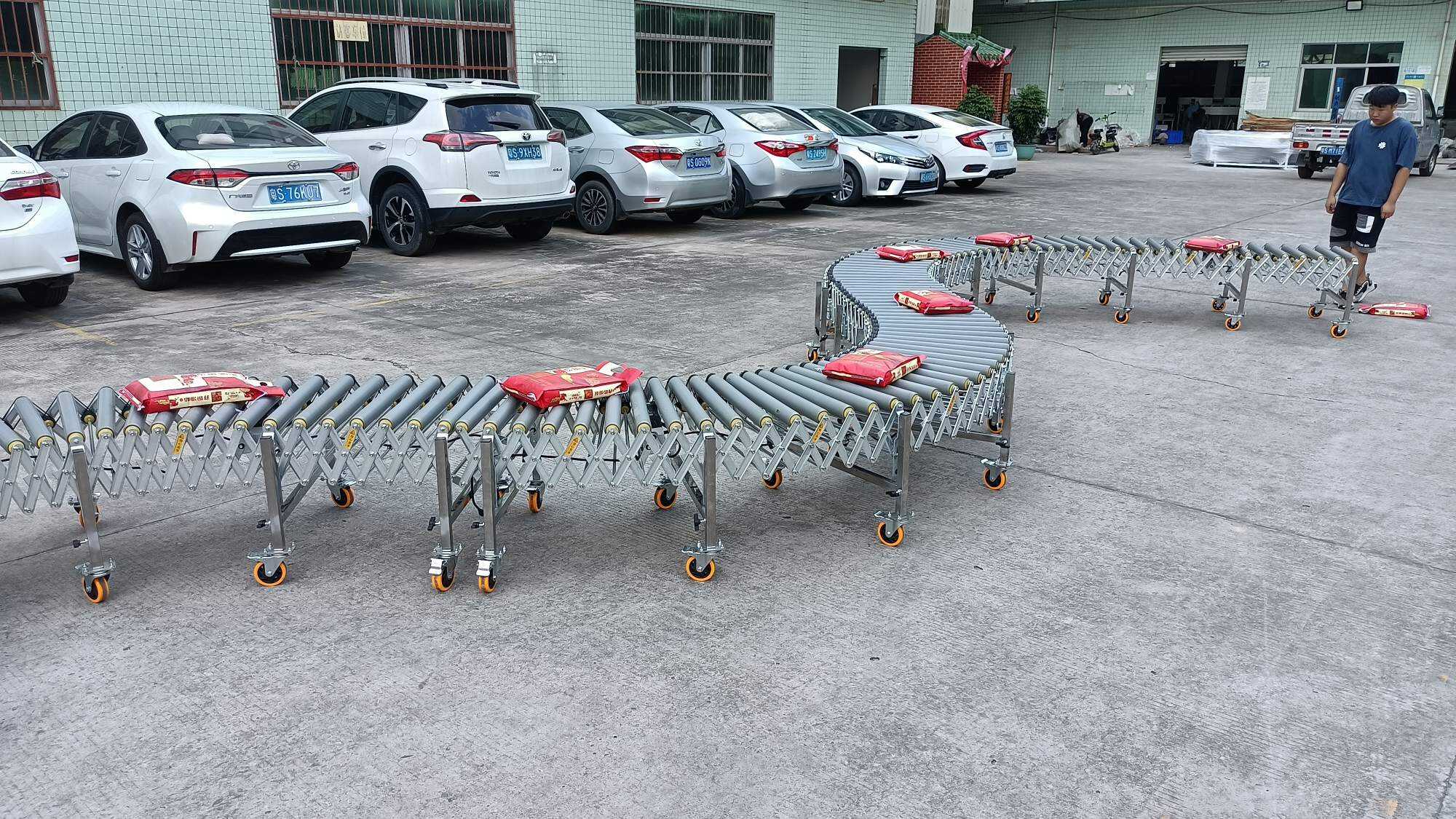
The multi-wedge belt Powered Roller Conveyor uses a multi-wedge belt drive design to achieve smooth and efficient cargo conveying. Motor spacing range...
 Plastic Drum
 Metal Drum
 Carton
 Roll
Roll
Operating workflow and manual coordination
Workers on the side of the truck push metal drums, plastic drums, or cartons to the front end of the incline conveyor, engage the hydraulic lift adjustment to mate with the roller section, and start conveying after confirming alignment. Personnel continuously monitor the rolling condition and travel path of the poly-V belt powered roller conveyor, adjusting the support-leg height or clearing jams when necessary to ensure goods pass stably through the transfer interface between the incline conveyor and the rollers. After the goods reach the second-floor platform, workers take over to unload or transfer them; as needed, they manually extend the roller section to precisely dock with the downstream conveyor position in the warehouse, ensuring continuous handoff to the next work area.
Changes after use
After the equipment is linked, a continuous corridor is formed from the truck opening to the warehouse’s second floor, reducing intermediate stops and repeated transshipment steps so the work rhythm is more focused on conveying and unloading points. The connection between the medium-duty incline conveyor and the poly-V belt powered roller conveyor enables smooth transitions between the incline and flat sections. On-site personnel can concentrate on unloading control, transfer direction, and coordination between the ground floor and upper floor, reducing unexpected interventions outside the conveying process.